It is thought that we know Monaco. The Rock, the Grimaldis, seven hundred years of dynastic legitimacy. Wealth as the natural order of things. It’s a coherent image. It’s almost entirely false.
Monaco was founded by a monk who wasn't a monk. Saved from bankruptcy by a casino built out of desperation. Reinvented for the whole world by an actress born in Philadelphia. Every time the principality was on the brink, someone changed the rules, and Monaco survived by becoming something else. It is from the sea, facing the Rock that rises straight from the Mediterranean, that this logic becomes visible.
A Monk with a Sword (1297)
On January 8, 1297, a Franciscan monk knocks on the door of the fortress of Monaco. The soldiers guarding the place open it. The monk enters. He draws a sword.
He is not a monk. He is François Grimaldi, nicknamed «Malizia,» meaning cunning in Genoese. Exiled from Genoa with his family after a factional dispute, he has been seeking a foothold on the Ligurian coast for years. The fortress of Monaco, built on a sheer rock drop into the sea, is impregnable by force. He takes it by disguise. His men follow him inside. The garrison is overwhelmed.
The Grimaldis will lose Monaco, reclaim it, and lose it again. They would not finally settle there until 1419. But the founding date remains January 8, 1297, and the Grimaldi family coat of arms clearly recalls it: two monks holding a sword in each hand. The house that has reigned over Monaco for seven hundred years has incorporated its own cunning into its official symbols. It is a rare form of honesty for a royal family.
This first act says something fundamental about Monaco: the Rock never belonged to the one who seemed to own it. It has always belonged to the one who knew how to turn a weakness – exile, small size, lack of resources – into a tactical advantage.
The surviving principality
For five centuries, Monaco survived through geography and diplomacy. Two square kilometers of rock between France and Italy – too small to be a threat, too well-placed to be ignored. The Grimaldis signed successive protection treaties with the major powers vying for control of the Mediterranean: Genoa, Spain, and France. Each treaty was a way of monetizing the principality's very existence.
In 1793, the French Revolution annexed Monaco. The Grimaldis were expelled. For twenty years, the Rock was called «Fort Hercule» and belonged to the Republic. In 1814, the Congress of Vienna re-established the principality – the great powers found it more convenient to have Monaco independent than to have to fight over it. The Grimaldis returned.
Mais en 1848, Menton et Roquebrune, les deux villes qui constituent 95% du territoire monégasque, votent leur rattachement à la France. Monaco se retrouve réduit à son rocher et à quelques hectares. Le prince règne sur une principauté sans ressources, sans agriculture possible, sans industrie. La famille Grimaldi a survécu à l’exil, à la Révolution et aux guerres napoléoniennes. Elle est maintenant au bord de la faillite ordinaire.
Bankruptcy and the Casino (1863)
Charles III ascended the throne in 1856. He inherited a principality of two square kilometers that produced nothing. He looked for a solution. He found François Blanc.
Blanc is the man who turned Bad Homburg, a German spa town of little interest, into one of the most frequented gambling destinations in Europe. Charles III grants him a concession to open a casino in Monaco. The Casino de Monte-Carlo opens in 1863. In 1866, the prince names the district built around the casino: Monte-Carlo – «Charles's Mount.» In 1869, he abolishes income tax for all Monegasque residents. There has never been a direct tax in Monaco since then.
The transformation is immediate. In less than a decade, Monaco goes from an insolvent principality to a destination that all of European aristocracy vies for. Palaces are built. Trains arrive. Russian, English, and Austro-Hungarian noble families take up their winter residences on the Rock and in Monte-Carlo. The casino finances everything: the roads, the gardens, the opera house that Charles III has built in 1879 and inaugurates with a play by Sarah Bernhardt.
François Grimaldi had taken Monaco through a monk's ruse. Charles III had just saved it through a banker's ruse: bringing in the money of others rather than producing one's own. The logic is the same. It still works.
Grace Kelly, or the invention of an image (1956)
In 1955, Monaco had money, but not yet a global image. The casino attracted European fortunes, the Grand Prix had existed since 1929, but to the rest of the world, Monaco remained a geographical curiosity: a rock between Nice and the Italian border, too small to be taken seriously.
What Charles III resolved with a casino, Rainier III resolved with a marriage. He met Grace Kelly at the Cannes Film Festival in 1955. An Oscar winner, from the Philadelphia upper class, she was one of the most photographed actresses in the world. They married on April 19, 1956. The ceremony was broadcast live throughout Europe and the United States. Two hundred million viewers watched a Hollywood actress become a princess on a Mediterranean rock.
Monaco was rich but invisible. Grace Kelly made it visible, thus desirable. It's a deeper transformation than the casino: she doesn't bring in money, she attracts attention. She applied the same logic as her predecessors: turning a weakness into an advantage. Monaco lacked image. She had one. She transferred it to the principality.
She died on September 14, 1982, on the road between Èze and Monaco. Her car veered off the road and fell into a ravine. She was fifty-two years old. The principality she had helped invent held state funeral rites for her. Heads of state from all over the world traveled to attend. Even in death, Grace Kelly afforded Monaco a global audience.
The Rock from the sea
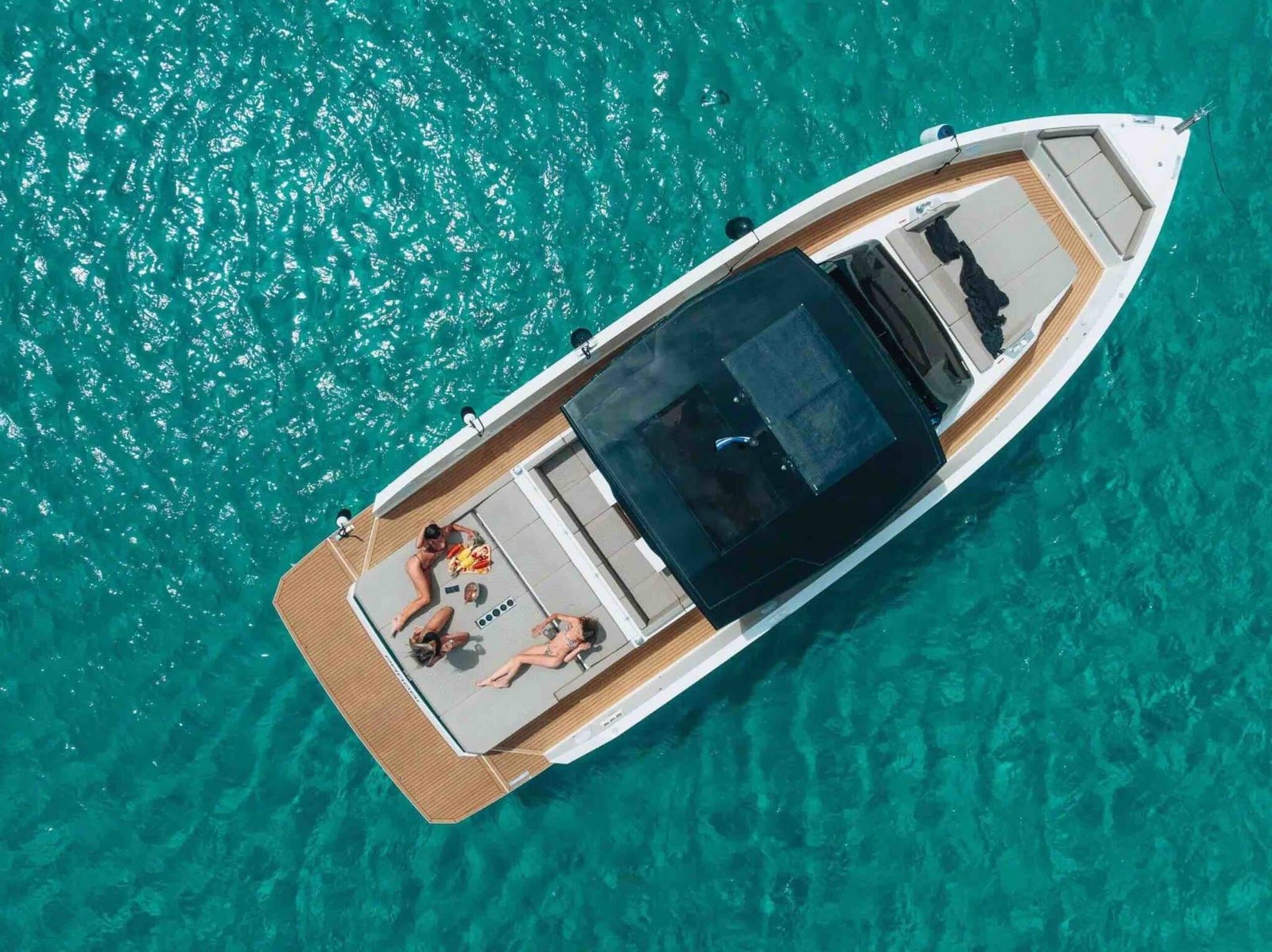
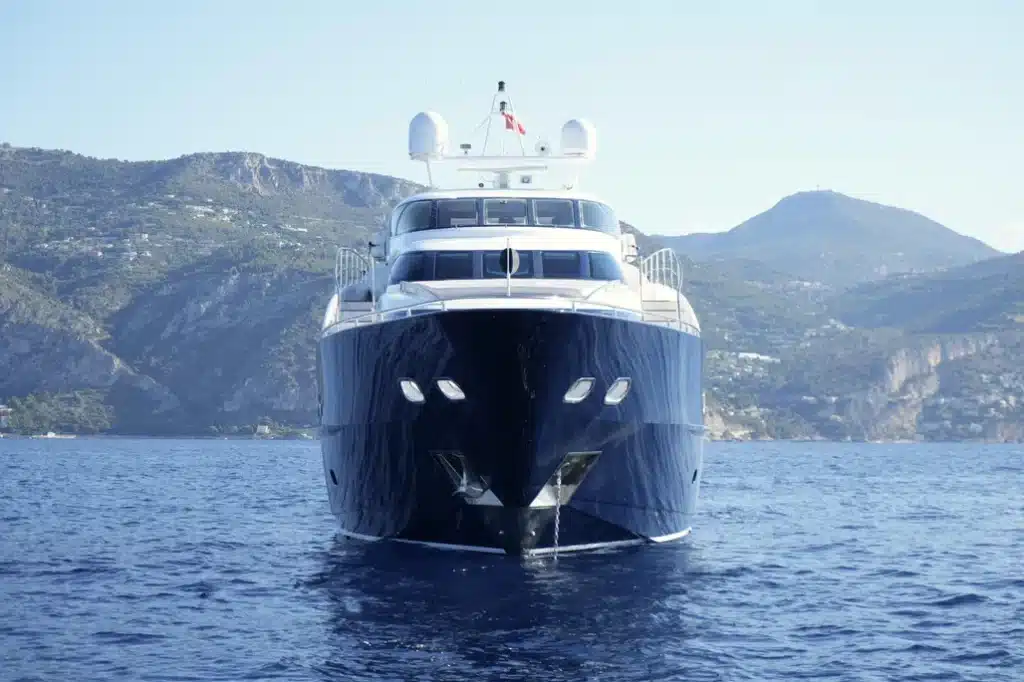
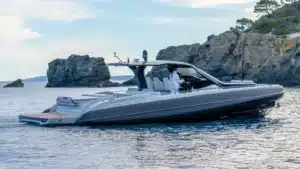
Monaco is best understood from the sea. From land, the principality is a succession of tunnels, inclines, and facades. From a boat, it reveals its true geography: a rock sixty meters high that drops straight into the Mediterranean, with the Grimaldi palace at the summit and the port at its feet. This is exactly what François Grimaldi saw in 1297 when searching for a fortress to capture. It's what sailors have seen for centuries before entering the port.
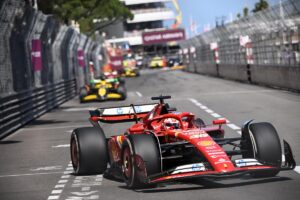
In Monaco, the port isn't a secondary backdrop. It's the point of origin: where one arrives, around which the principality is organized, and which makes the Rock legible. Port Hercules, Monaco's main port, is one of the few deep natural anchorages between Genoa and Toulon. That's why the Greeks settled there before the Romans, and the Romans before the Grimaldis. In May, during the Grand Prix, the Formula 1 circuit loops around the port. From a boat moored in Zone 1, you're literally inside the circuit, with the single-seaters passing just a few dozen meters away. It's one of the most requested experiences on our calendar, and one of the most difficult to obtain: seats in Zone 1 are sometimes negotiated years in advance.
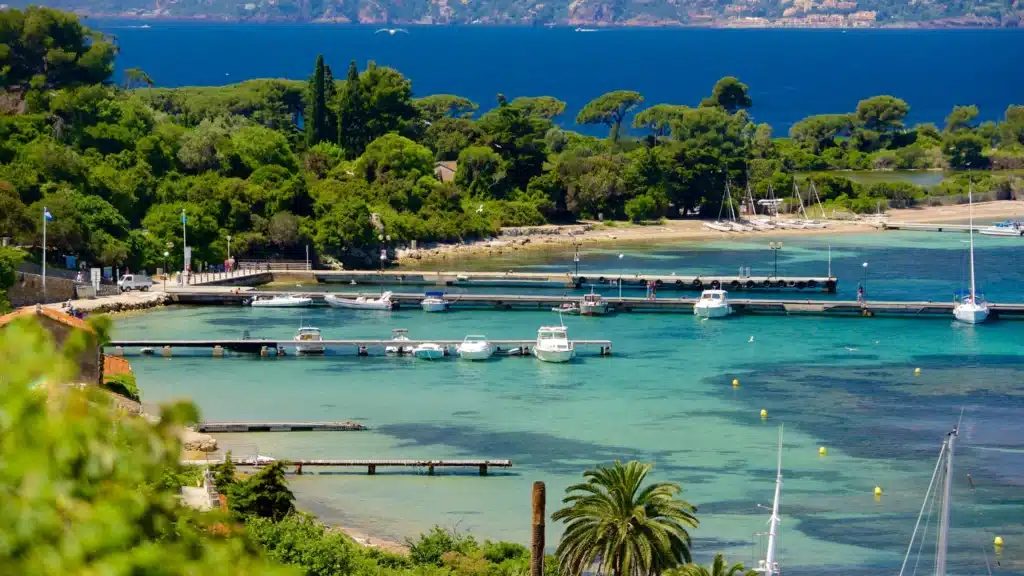
Outside of the Grand Prix, Monaco is best appreciated differently from the sea. The’Itinerary Nice - Villefranche - Monaco is one of the densest navigations on the Riviera: the bay of Villefranche (one of the deepest in the Mediterranean, former base of the US VI Fleet until 1966), then Cape Ferrat, then Monaco which appears around the bend of the coast, the Rock first, then gradually the port, the towers of the Condamine, Monte-Carlo. The view has been the same for centuries. Only the height of the buildings has changed.
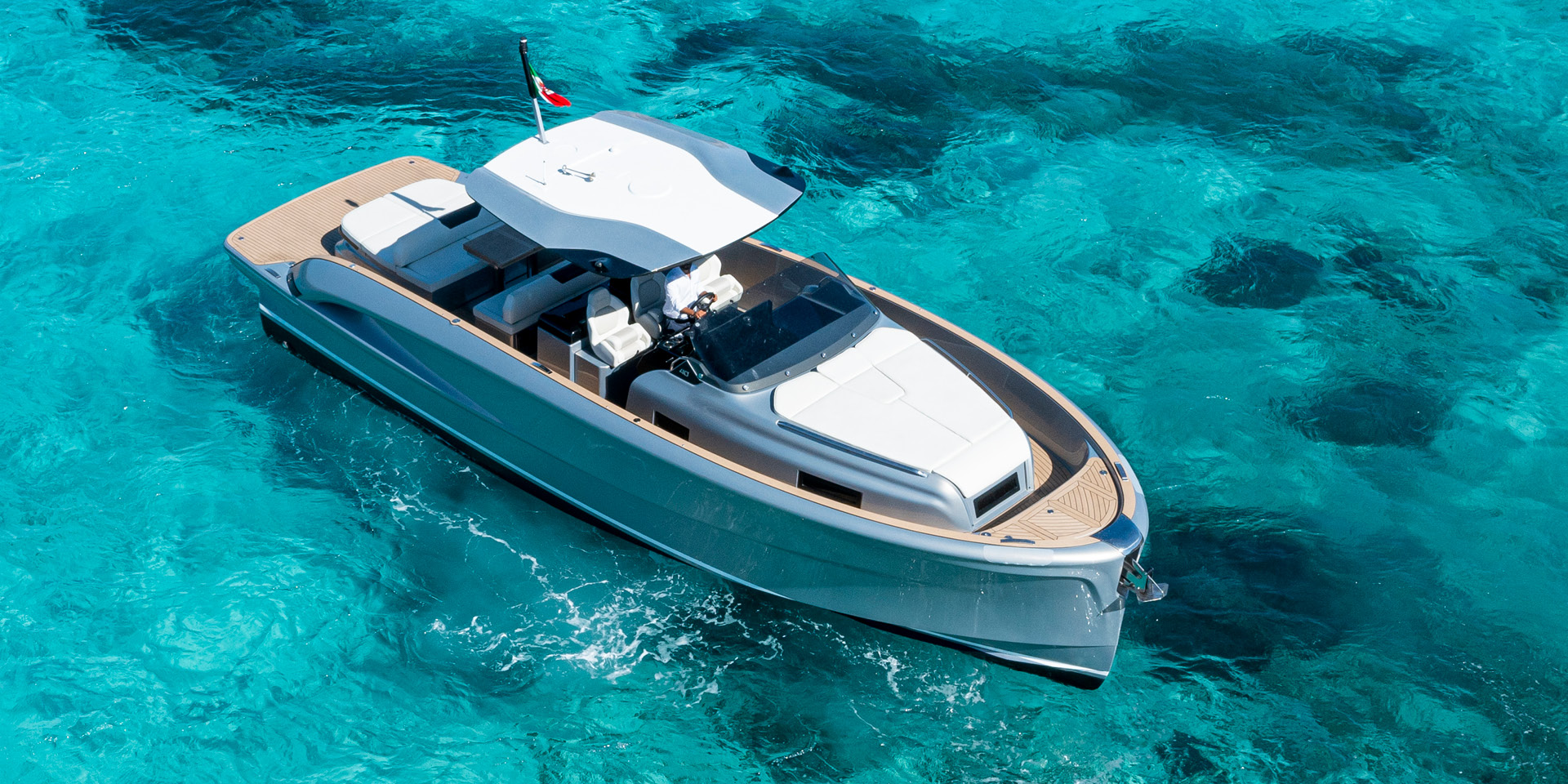
From Nice or Golfe-Juan, ..., Monaco is forty-five minutes to an hour by boat. The route from Cannes follows the entire coast, Cap d’Antibes, Antibes, Juan-les-Pins, Cagnes, Nice, Villefranche, Cap Ferrat, before arriving at the Rock. This is the only way to understand Monaco before entering it.
What the Rock says next
Seven hundred years after François Grimaldi, Monaco's logic hasn't changed. The principality survived by transforming its constraints into an identity: too small for an army, too well-placed for a casino. Too discreet to exist alone, too photogenic to be ignored after Grace Kelly. Each threat became an opportunity to reinvent itself.
From the sea, facing the Rock, you can see the three superimposed layers: the 13th-century fortress at the summit, the casino that financed it all below, and everywhere the image that 1956 established and that the whole world recognizes. These are not three separate stories. It's the same ruse, repeated three times, by three different figures who understood the same thing: in Monaco, what seems impossible from land becomes obvious from the sea.
This evolution of yachting on the French Riviera, encompassing experience, image, and high-end positioning, is widely covered by the specialized press today, as notably illustrated by a article published by Monaco Tribune.
→ Organize your day in Monaco by boat from Cannes or Golfe-Juan
FAQ – Monaco by Boat
Can you enter the port of Monaco on a privatized boat?
Yes. Port Hercule is open to visiting boats; you need to contact the harbor master's office for a berth. Outside of event periods (Grand Prix, Monaco Yacht Show), finding temporary dockage is possible. During the Grand Prix, berths in Zone 1 are often booked years in advance and offer the most exclusive Riviera experience.
How long does it take to go to Monaco by boat from Cannes?
Between 1:30 and 2 hours from Cannes or Golfe-Juan, depending on the boat and sea conditions. From Nice, about 40-50 minutes. The navigation goes along the entire coast, Cap d'Antibes, Juan-les-Pins, Cagnes-sur-Mer, Villefranche, Cap Ferrat, before arriving at the Rock.
Pourquoi les armoiries de Monaco montrent-elles des moines armés ?
The coat of arms of the Grimaldi family depicts two monks holding a sword, a direct reference to the principality's founding act. In 1297, François Grimaldi (nicknamed «Malizia,» cunning) disguised himself as a Franciscan monk to surprise attack the fortress of Monaco. The family has incorporated this founding ruse into its official symbols ever since.
When did Monaco abolish income tax?
In 1869, under the reign of Prince Charles III, the same one who had the casino built in 1863. The casino's revenue made taxes superfluous. Monaco has not had direct income tax since then, making it one of the first tax residency destinations in the Mediterranean.