

There's an idea that everyone accepts without question: summer on the French Riviera has always existed. The pine trees, the sun on the rocks, the yachts in front of Eden Roc. As if it had always been there. This is not the case. Before 1923, there was no summer on the Riviera. And if this summer exists today, it's because two Americans refused to go home and convinced a hotelier not to close his doors.
The Cap d'Antibes is a four-kilometer peninsula that encloses the bay between Cannes and Antibes. From the road, you can see almost nothing of it: stone walls, dense pine trees, gates. It is from the sea that the Cap reveals what it truly is, and what it has been.
Before 1923, the Riviera closed in May.
The French Riviera was invented by the English. Not as a summer destination, but as a winter one. Starting in the mid-19th century, British aristocracy would descend on Nice and Cannes as early as November to escape the London cold. They were the ones who built the grand hotels, the promenades, the palaces. Lord Brougham, stuck in Cannes in 1834 due to a cholera epidemic at the Piedmontese border, spent the winter there and spoke of it throughout England. The town became covered in English villas.
But that Riviera ends in spring. In May, the hotels close. The heat is deemed unbearable, the sea uninviting, and the insects ever-present. Cap d'Antibes in the summer is deserted. La Garoupe beach, now one of the busiest on the Mediterranean, is covered in seaweed. No one cares. No one comes.
This remains true until 1923.
The Summer of Two Americans
Gerald and Sara Murphy are American, wealthy, and different. He is the heir to a New York leather goods company (Mark Cross); she is the daughter of an industrialist from Cincinnati. They have been living in Paris since 1921, frequenting Picasso and the Ballets Russes, and possess that rare ability to turn any place into a center of gravity.
In 1923, they discovered the Hôtel du Cap, a large white villa built in 1870 for Hippolyte de Villemessant, founder of Le Figaro, which became a hotel in 1887. The establishment closed in May like all the others. Gerald Murphy persuaded Antoine Sella, the manager, to keep it open for them. «We'll pay whatever you ask.» Sella agreed. It was the first time the Hôtel du Cap had stayed open through the summer.
The Murphys then go down to Garoupe beach. They find an expanse covered in brownish-green seaweed. Every morning, before anyone else arrives, Gerald comes and rakes the sand. He clears a square. He plants some parasols. He does it again the next day. This is how the Mediterranean summer beach: one man, one parasol, one square of clean sand, was invented.
Around this sandbox, something improbable is being built. The Murphys rent then buy a villa on the heights of Cap d'Antibes: Villa America. They invite their Parisian and New York friends there: Pablo Picasso, Fernand Léger, Cole Porter, Archibald MacLeish, John Dos Passos. And F. Scott Fitzgerald, who arrives in 1925 with Zelda and settles in Juan-les-Pins, just across the bay.
Fitzgerald wrote the summer
You have to imagine what La Garoupe represented in 1925 to understand what's happening here. It wasn't yet a seaside resort. It was a private garden that two Americans created for themselves, on a beach that no one wanted. And in this garden, a few dozen of the most creative people in the world spent their days swimming, drinking rosé, and listening to music.
Fitzgerald is fascinated and unsettled by the Murphys. He observes them with the clinical precision that great novelists have for people superior to them. He spends several summers on the Riviera. He takes notes. He returns again, as his life unravels and so does that of the Murphys.
In 1934, appeared Tender is the night. The action takes place on a Riviera beach, a beach the reader immediately recognizes as Garoupe, in front of a hotel that looks exactly like the Hôtel du Cap. Dick and Nicole Diver are the Murphys, not exactly, never exactly in great novels, but enough for Gerald Murphy to write to Fitzgerald, after reading the book: «You saw things I didn't know you saw.»
Cap d'Antibes thus entered world literature as the image of a precise, carefree, sunny, slightly unreal happiness, and of its inevitable disappearance. The novel is an elegy for something that still existed when it was written and would no longer exist when it was read.
What the Cape doesn't show from the road
Apart from Garoupe beach and a few well-known addresses, the Cap d’Antibes remains closed off to those who approach it by land. Villas disappear behind walls. Gardens are invisible. And the two structures that speak most about the history of this place are almost entirely hidden from view from the road.
The first is Fort Carré. The Cap was always a strategic location before becoming a resort destination. Construction began in 1553 under Henry II, with four star-shaped bastions, designed to defend the border with the Duchy of Savoy. In August 1794, a twenty-five-year-old general was imprisoned there for ten days after the fall of Robespierre. His name was Napoleon Bonaparte. He would be released due to insufficient evidence. History does not remember insufficient evidence.
The second is the Hôtel du Cap-Eden-Roc. The Eden Roc pavilion, the restaurant suspended on the rocks, with its pool carved out of the rock in 1914, has become the most reproduced image of the Riviera. For decades, the establishment only accepted cash. No credit cards, no checks. You paid in cash, or you didn't pay. This policy lasted until 2012. It said something about the nature of the place: some places operate by their own rules, independent of the outside world. This is also what the Murphys understood in 1923.
The only way to see the Cape
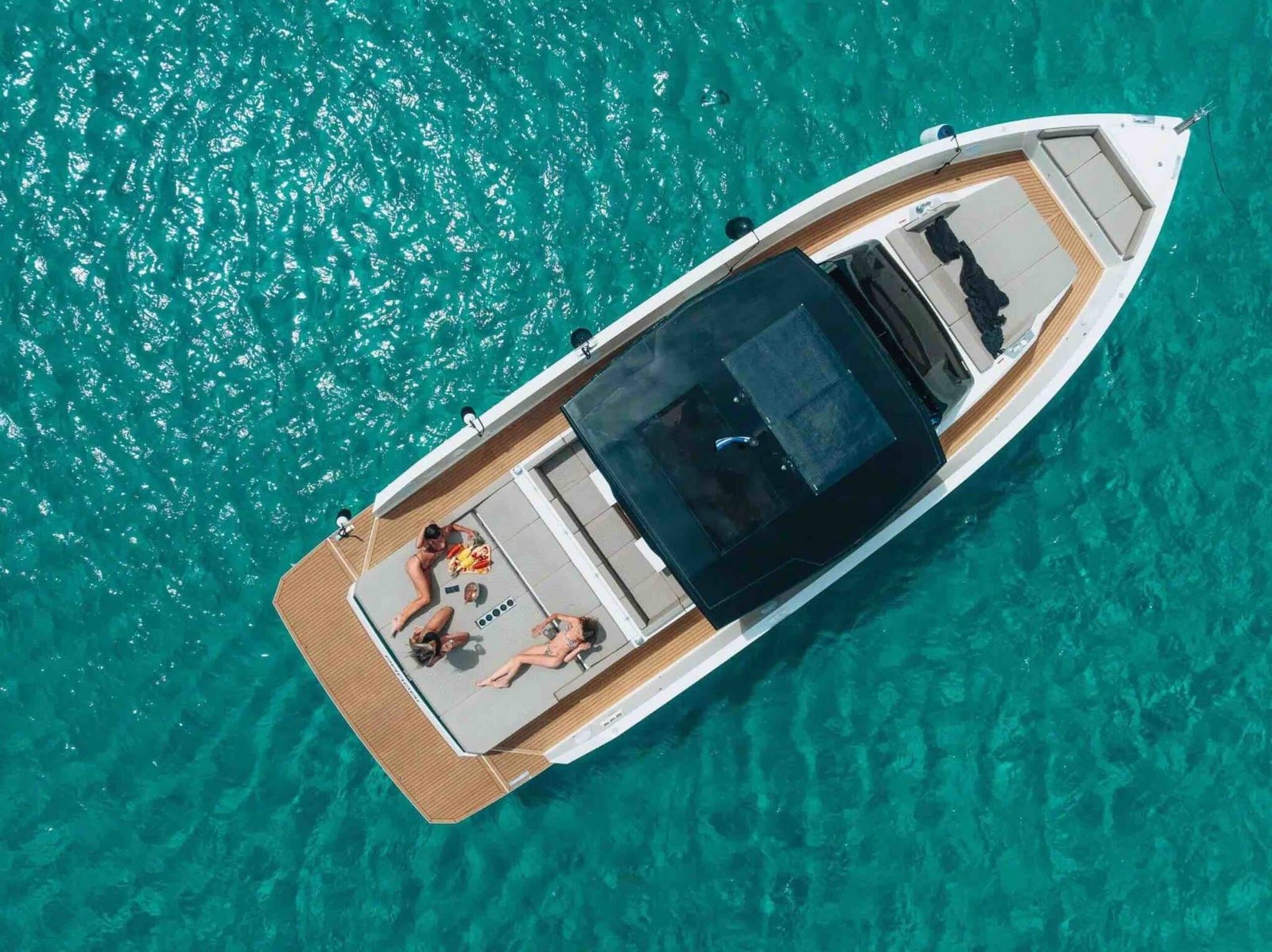
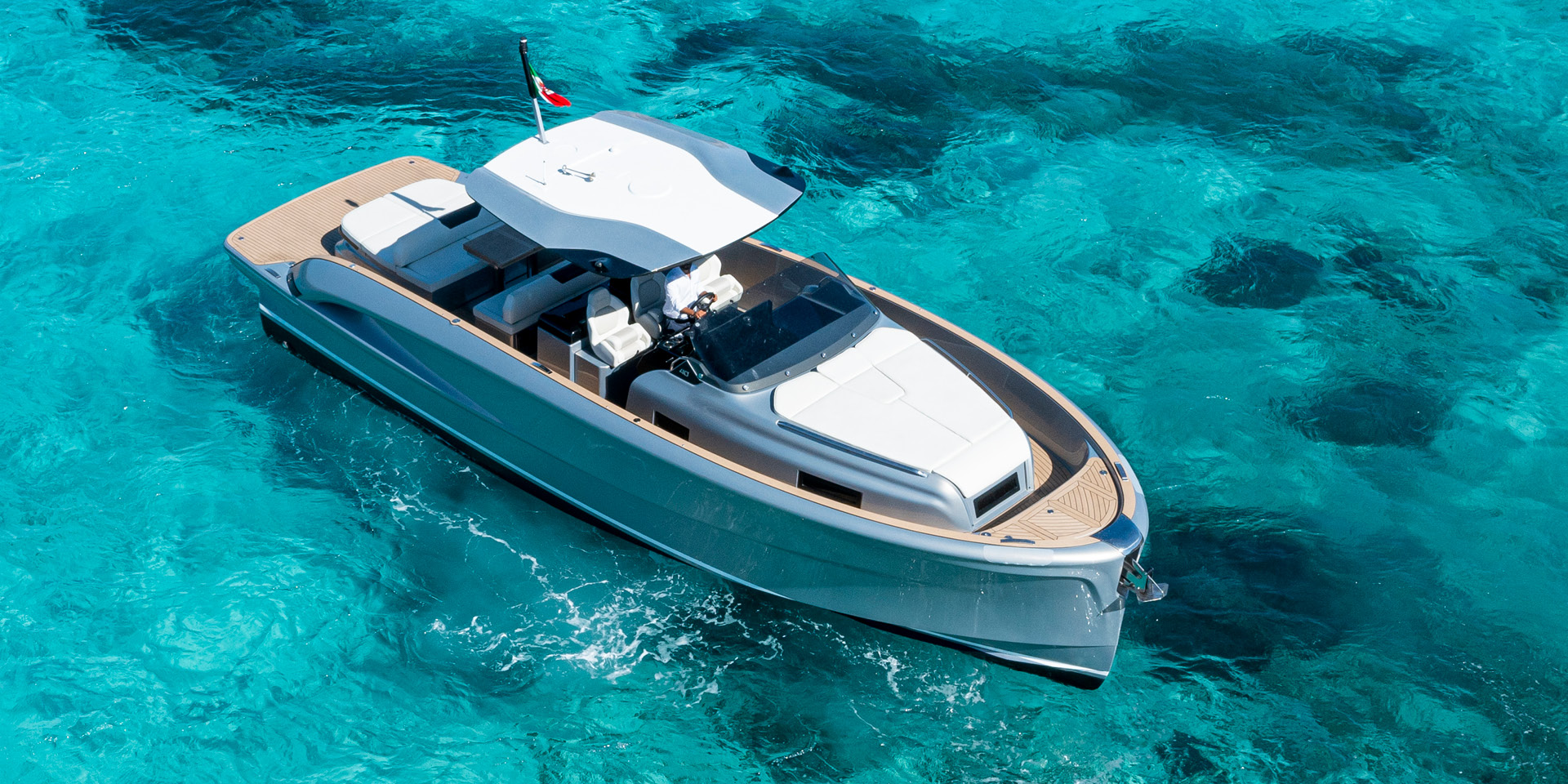
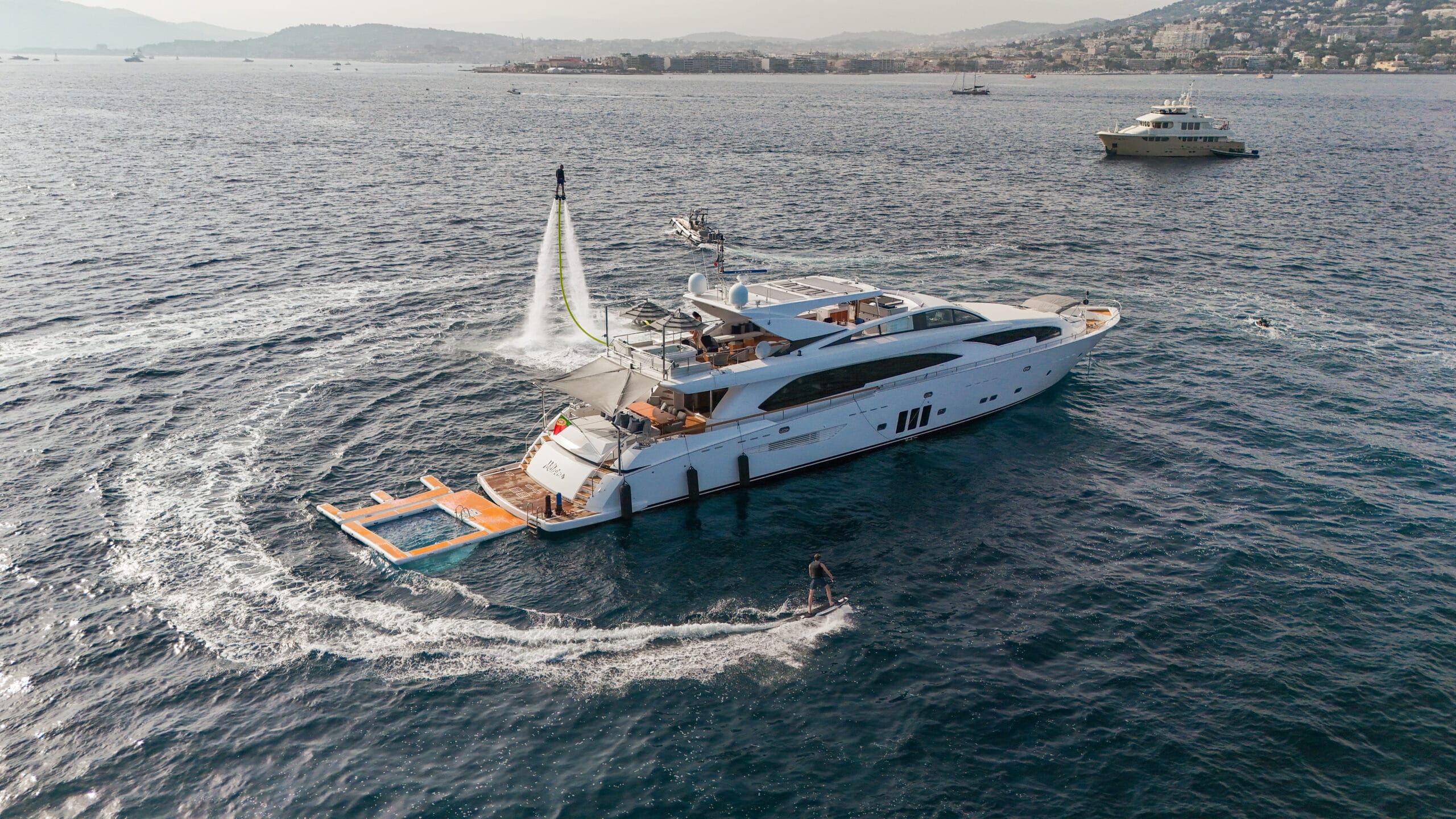
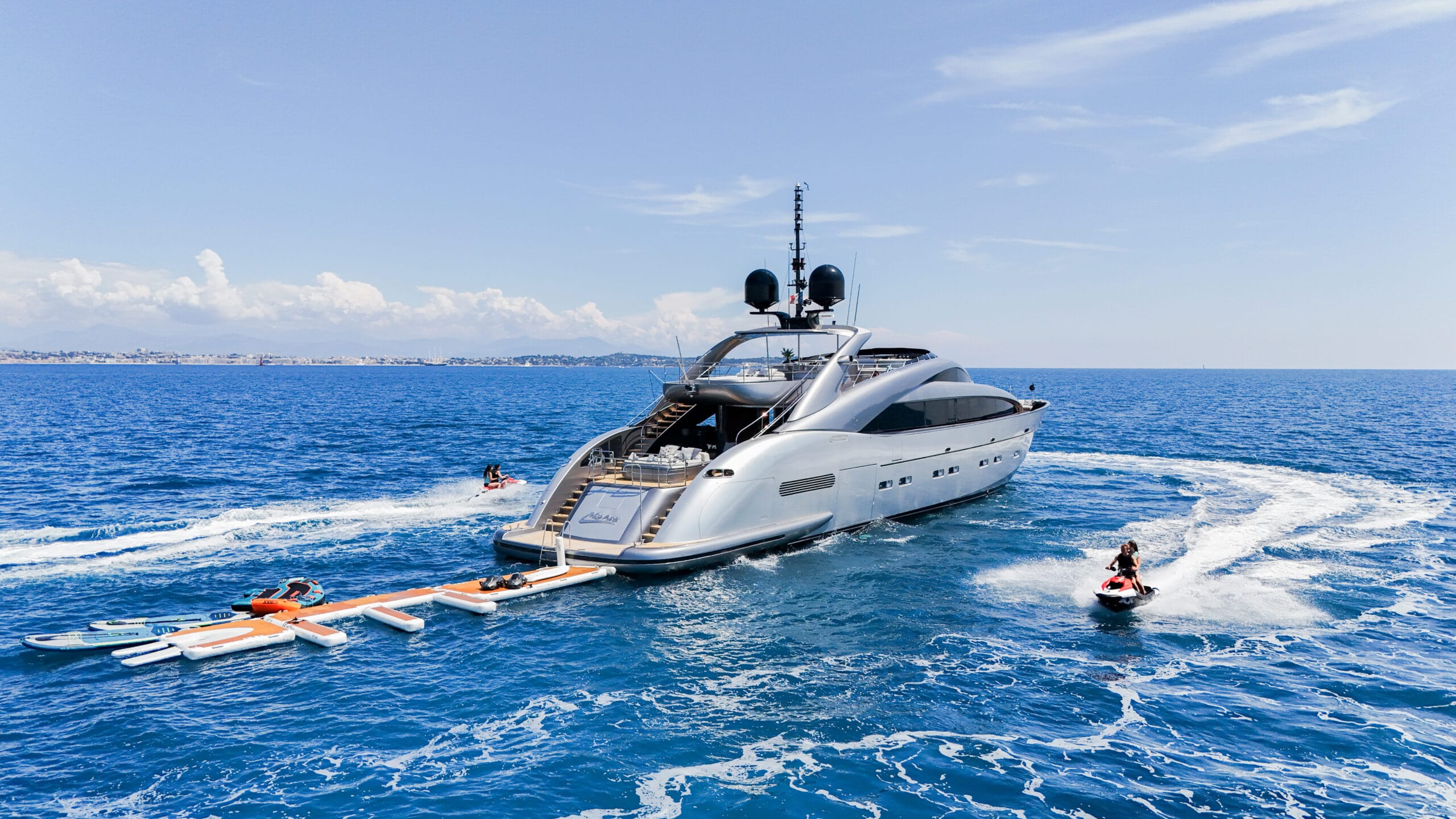
The Cap d'Antibes is a peninsula. Its coastal perimeter – the inlets, coves, and southern cliffs – is inaccessible by road. There is no path. The few seaside trails quickly run into private properties. The geography of the Cap is meant to be viewed from the sea, not from the land. This is also why renting a boat from Cannes or Golfe-Juan remains the only way to truly see the Cap d'Antibes by boat as it really is.
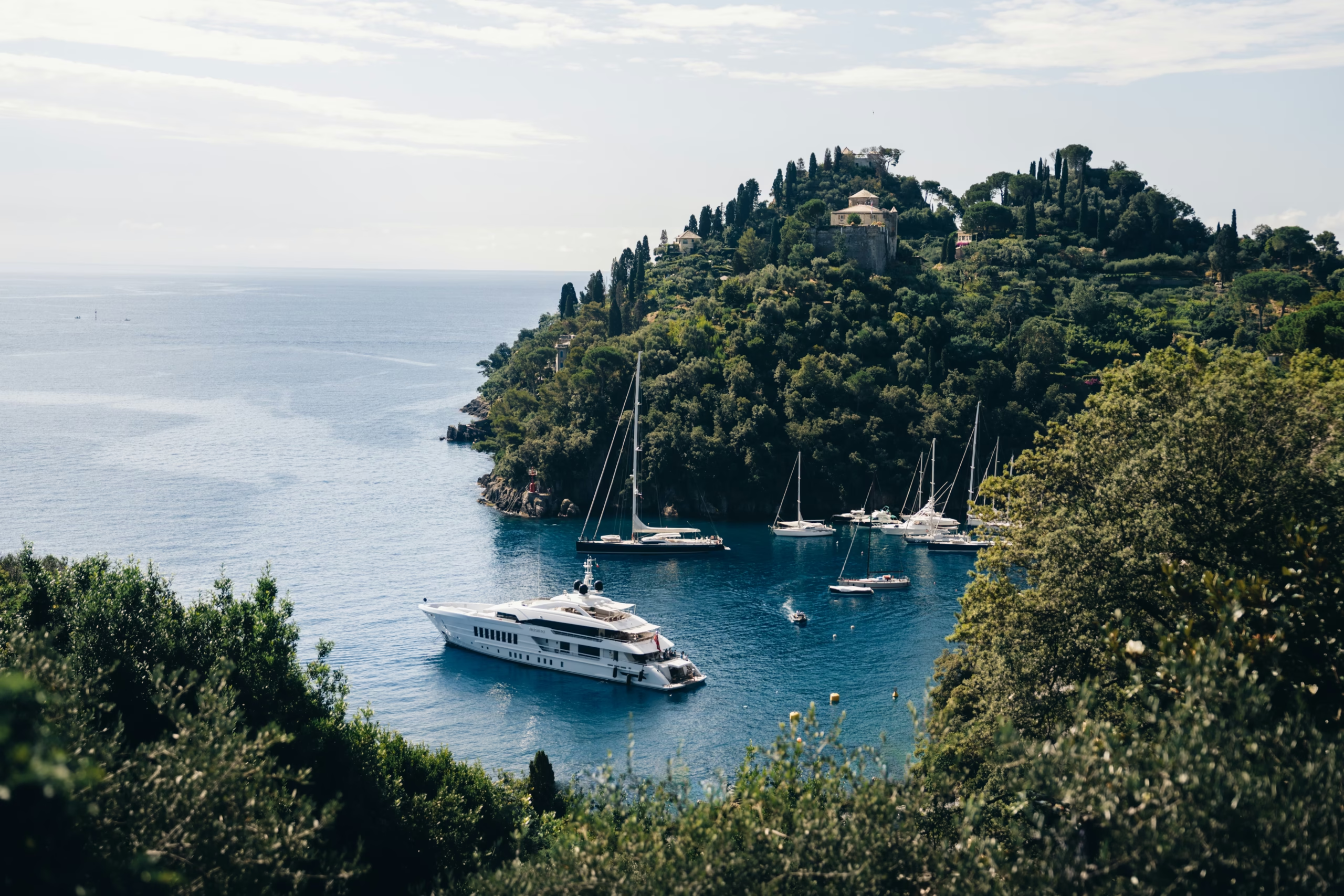
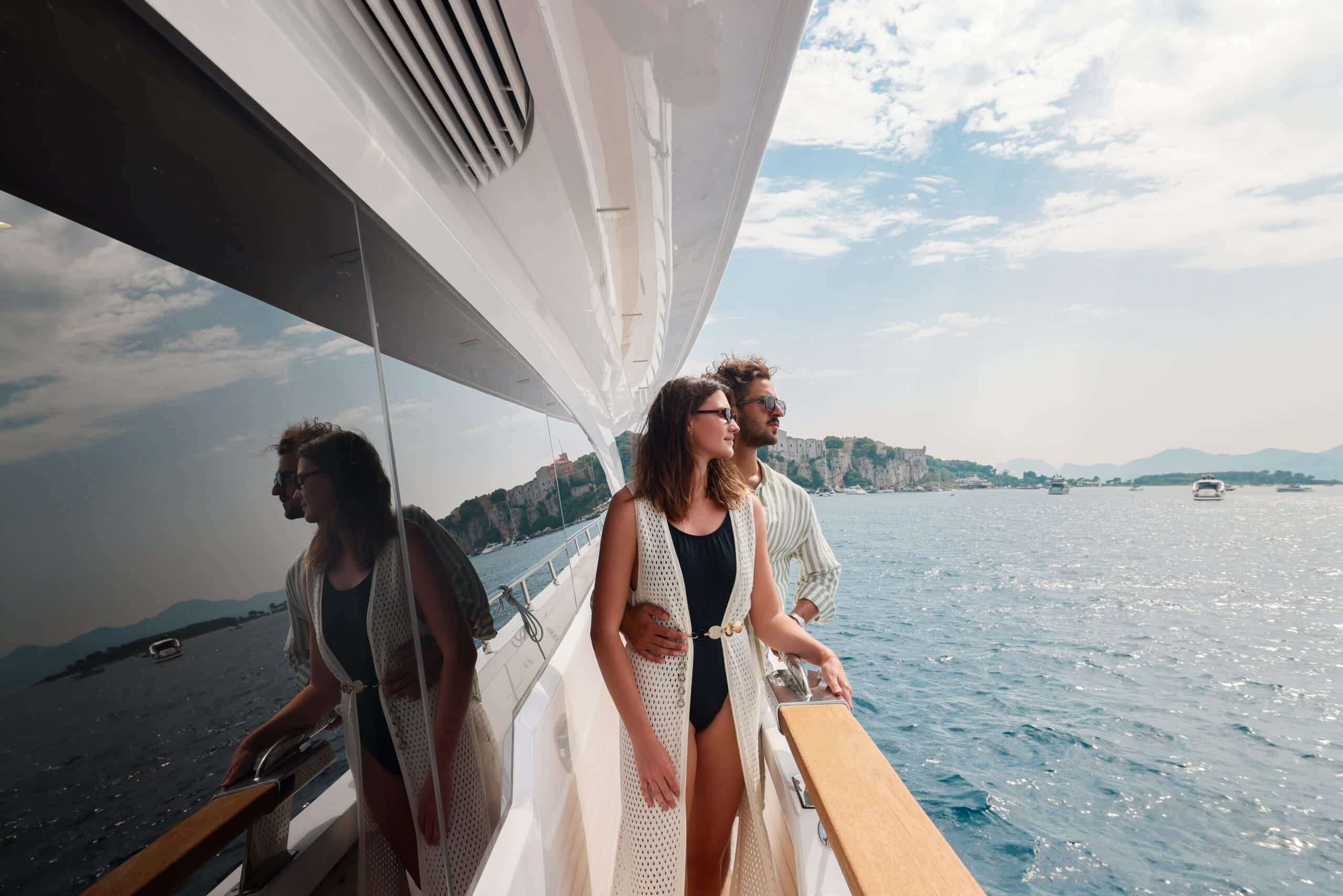
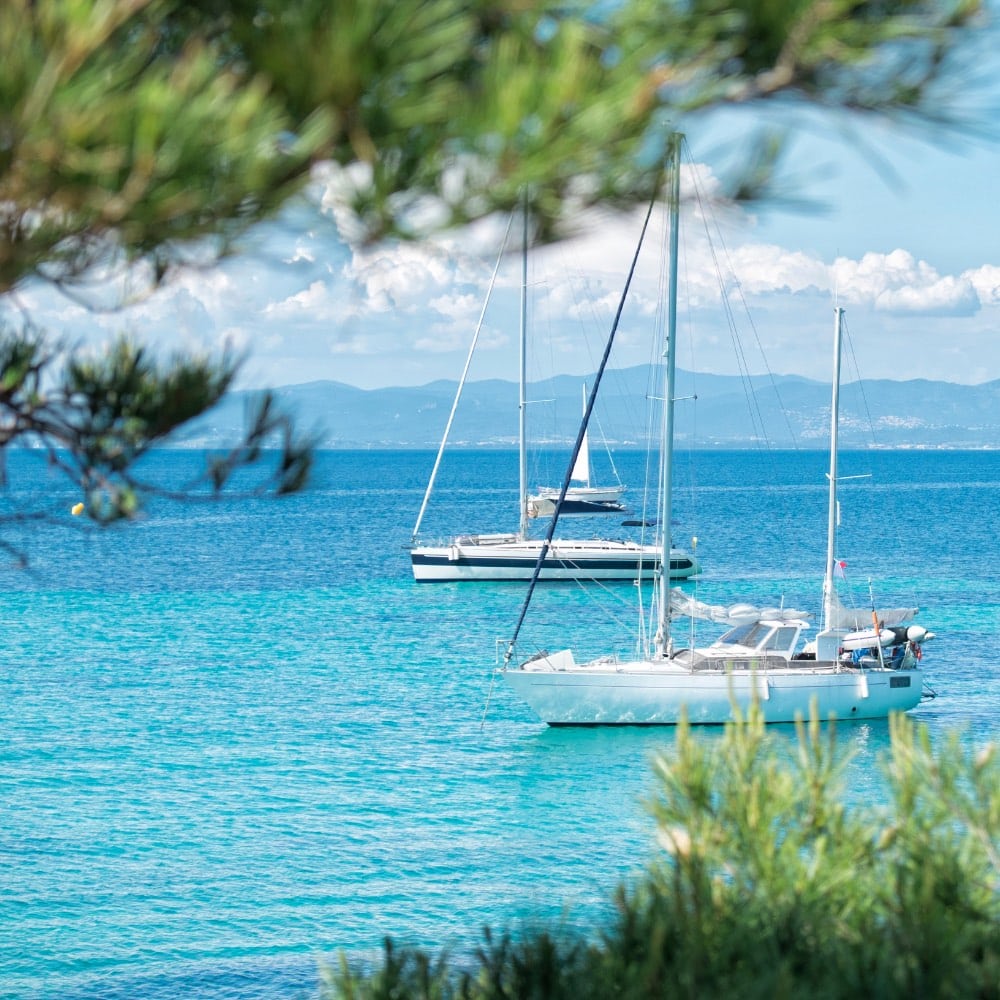
From a boat, the Cape changes completely. You sail along coves that no one ever sees from the road, waters of an almost unreal blue-green, perfectly preserved Posidonia seabeds, rocks that drop straight into five meters of clarity. The Garoupe lighthouse appears on the heights, one of the most powerful in the Mediterranean, visible from 50 kilometers away in clear weather. To the south, the cliffs at the tip of the Cape form a line that Fitzgerald saw from the beach for summers, and which has not changed.
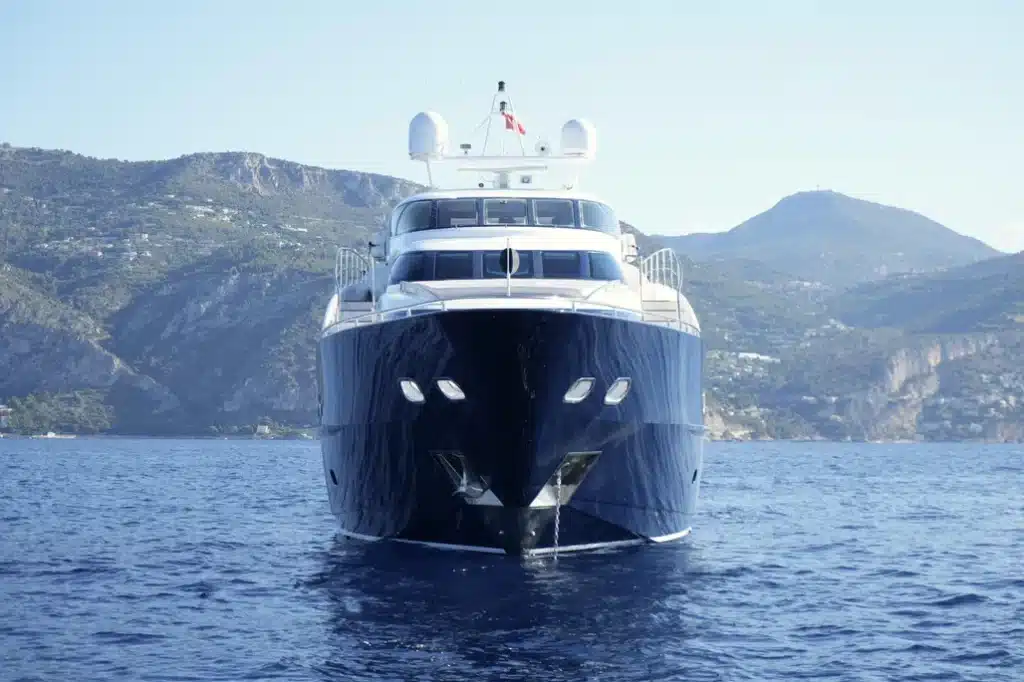
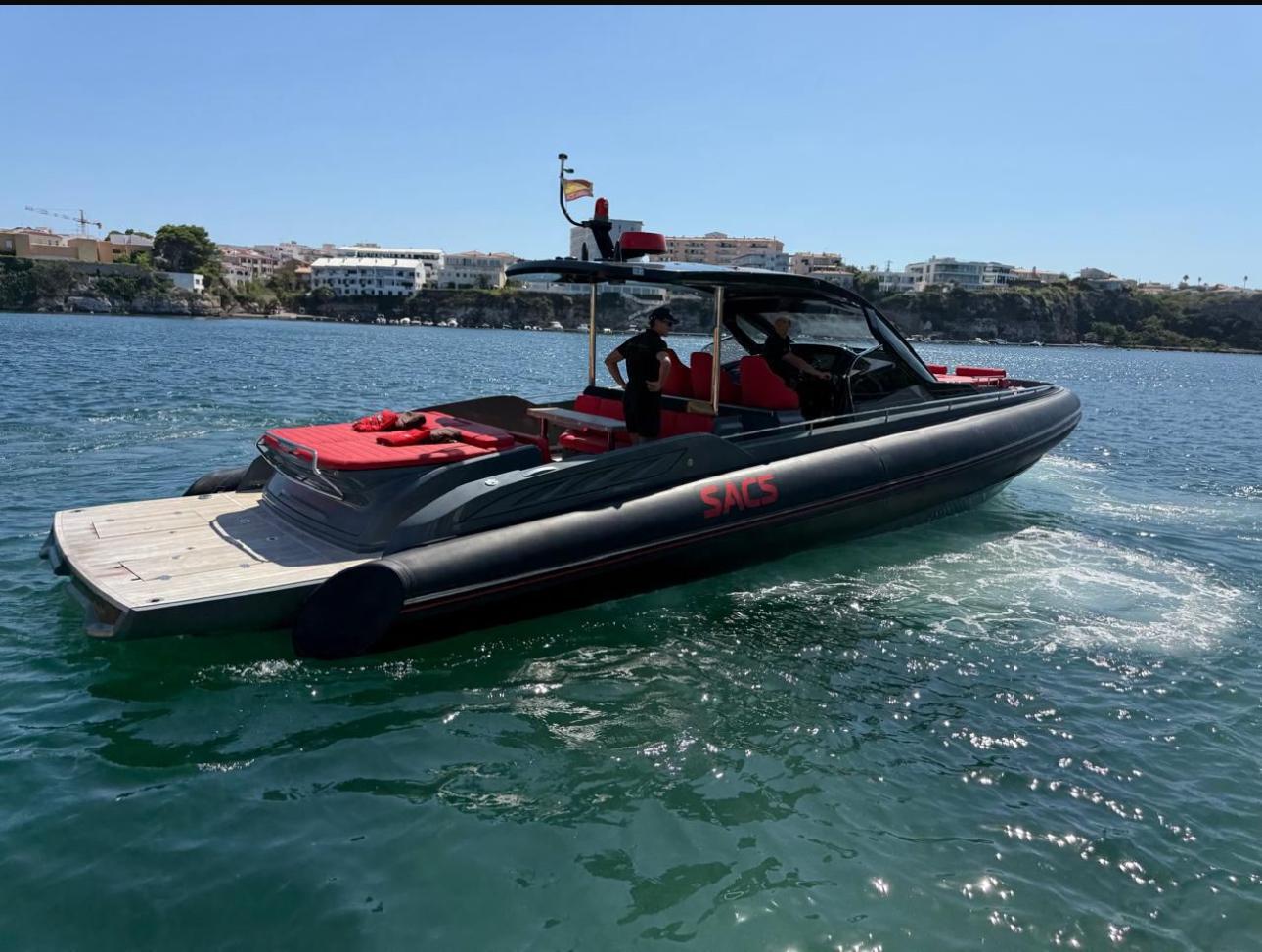
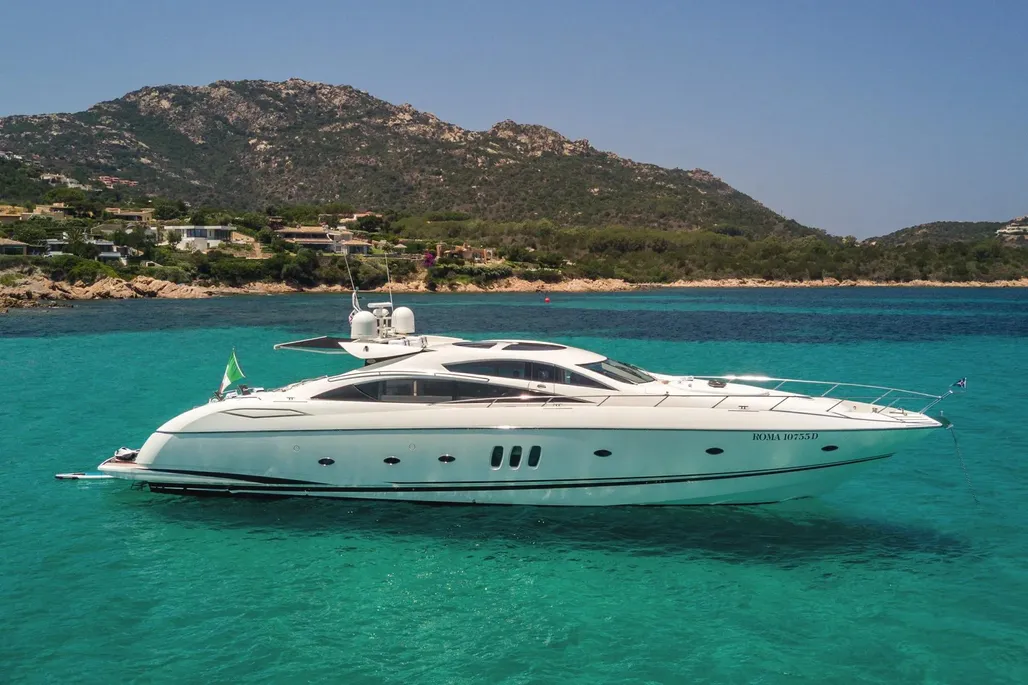
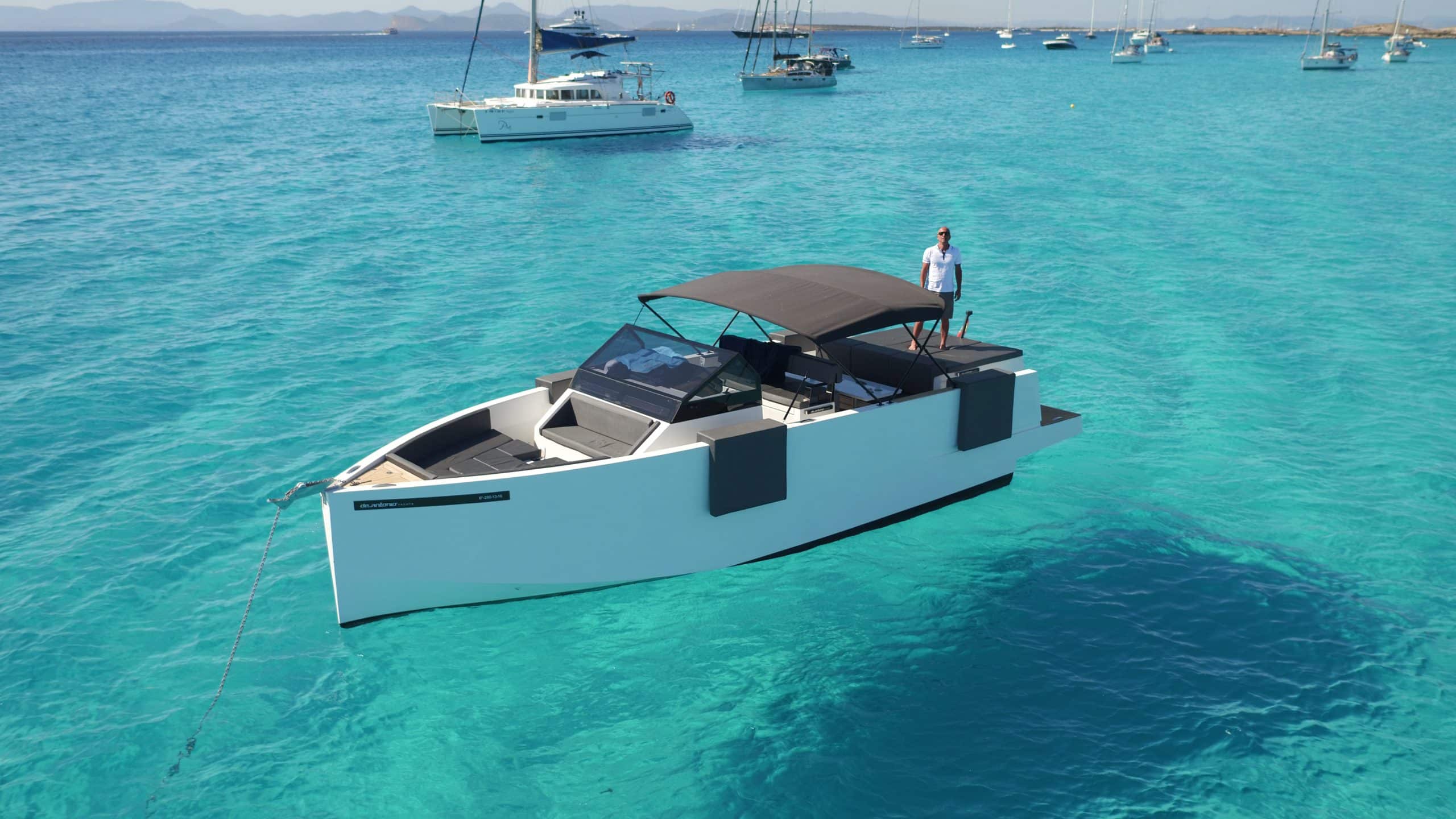
The inlet north of the Cape bears a nickname that locals know well: "Billionaires' Bay." The name is misleading. It's not a body of water for superyachts; the bay is too small, the bottom too shallow. In the summer, it fills with dayboats and RIBs, precisely the right type to navigate in. The villas overlooking the cove belong to families who have been returning here every summer for decades. From the sea, one understands why no one leaves.
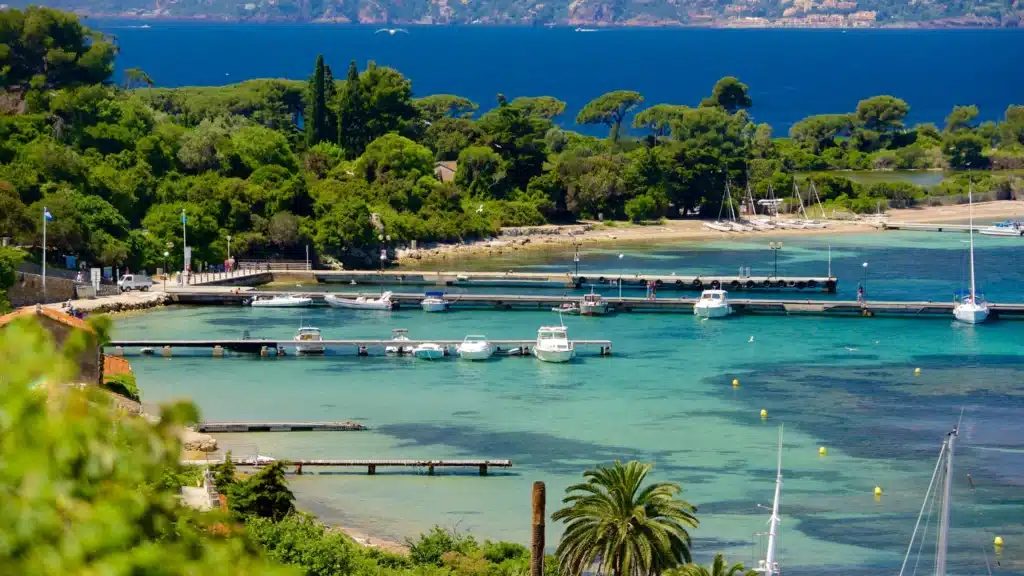
We generally anchor in front of the Olivette cove, or closer to the Garoupe, at the very spot where the Murphys used to swim in the morning before raking their patch of sand. The water clarity over the seagrass beds is sufficient for snorkeling. In July and August, you need to arrive early. In May or June, there's almost no one.
d of’Itinerary Cannes – Lérins – Cap d’Antibes What we offer from the start of Golfe-Juan – one of the most complete days the Riviera has to offer, between the history of the islands in the morning and the Cap's calanques in the afternoon. It's also the itinerary that helps you understand why these two kilometers of water between Cannes and the Cap concentrate so many different stories in such a small space.
What the Murphys had understood
Gerald Murphy died in 1964. Sara in 1975. Villa America was sold, transformed, divided. La Garoupe beach welcomes thousands of bathers each summer who are generally unaware that this summer they are living was invented there, by two people who had decided the season would not end in May.
What the Murphys had understood, and what Fitzgerald put into words, is that the Mediterranean is not a transit destination. It is a place where one decides to stop, and once stopped, one never truly leaves. The Cap d'Antibes, from the sea, still gives that impression: that someone made the deliberate choice to stay here, and that this choice changed something.
From Cannes or Golfe-Juan, the Cape is twenty minutes away. Less time than it takes to find a parking spot in August.
→ Organize your day on Cap d'Antibes by boat
FAQ – Cap d'Antibes by Boat
Can you swim freely at Cap d'Antibes?
Yes, several anchorage areas are accessible around the Cape, notably in front of Olivette cove and Garoupe beach. Some areas are protected (seagrass beds): you must use the available mooring buoys or anchor on sand. In July-August, the best spots are taken early in the morning.
What is the best time to visit Cap d'Antibes by boat?
May, June, and early September offer the best conditions: clear water, less boat traffic, available moorings. July and August remain excellent but are more crowded – you need to arrive early in the morning for the best spots.
Can Fort Carré be visited from the sea?
Fort Carré is visited on foot, from Antibes. From the boat, you can clearly see its star shape from the sea – it’s easily recognizable at the entrance to the port of Antibes. For an interior visit, you need to dock at Port Vauban and walk to the fort (about 15 minutes).
Is the Hôtel du Cap-Eden-Roc accessible by sea?
The Eden Roc pavilion is directly on the rocks, overlooking the sea. You can sail past and clearly see the pool carved into the rock. There is private boat access for hotel guests, but the mooring in front of the establishment is not public.