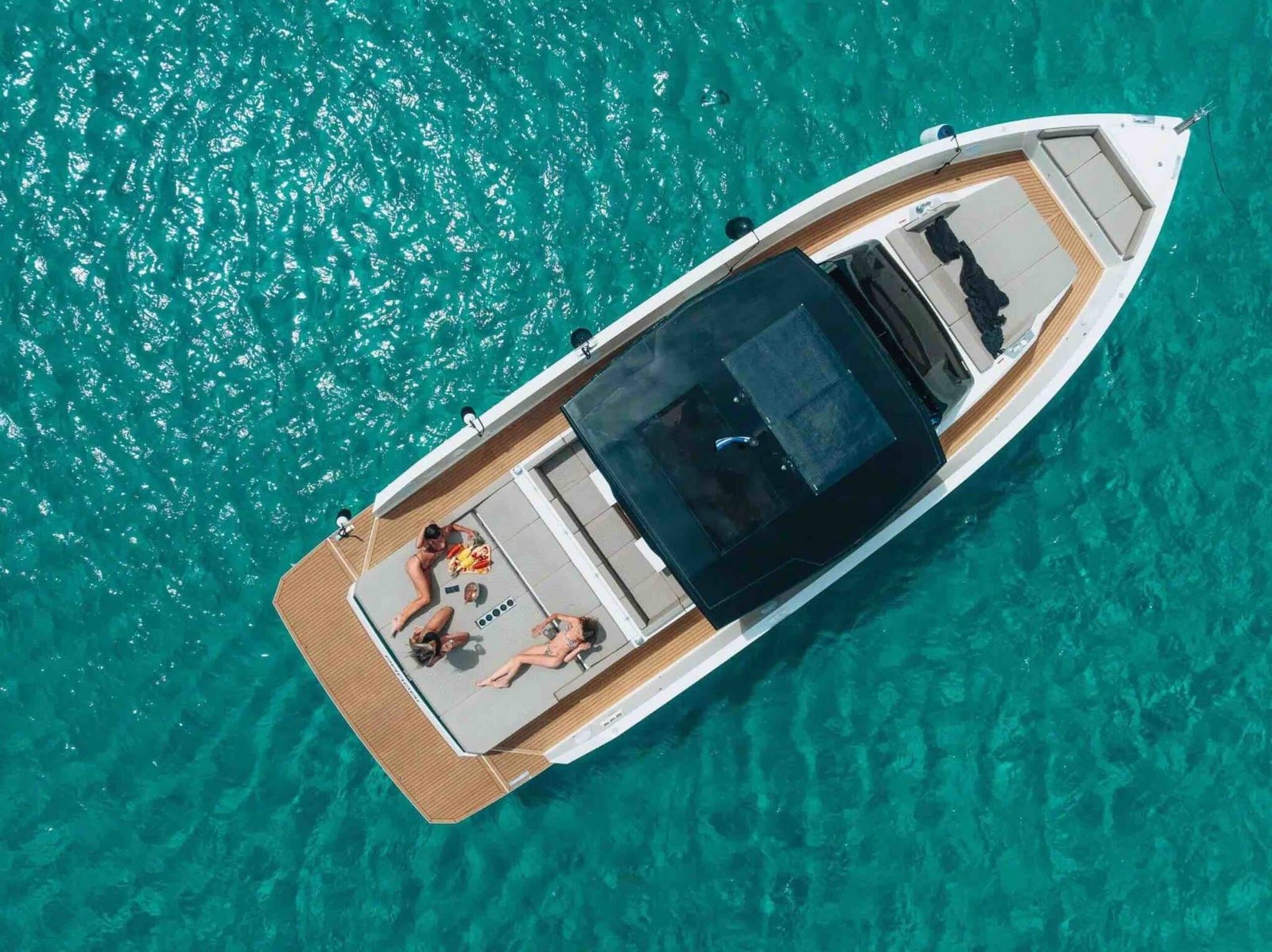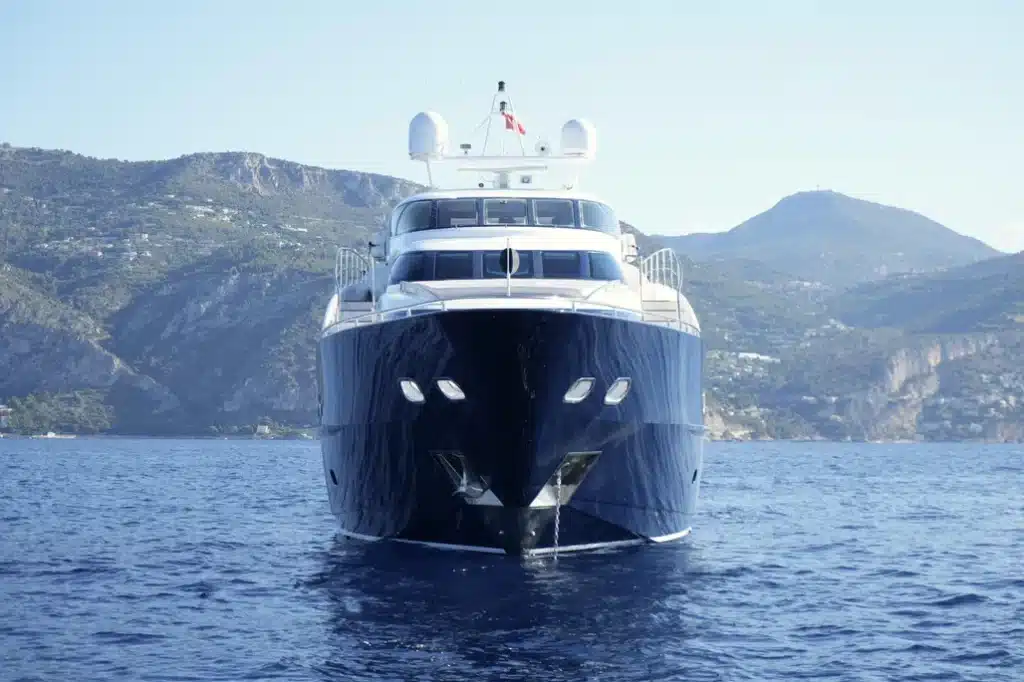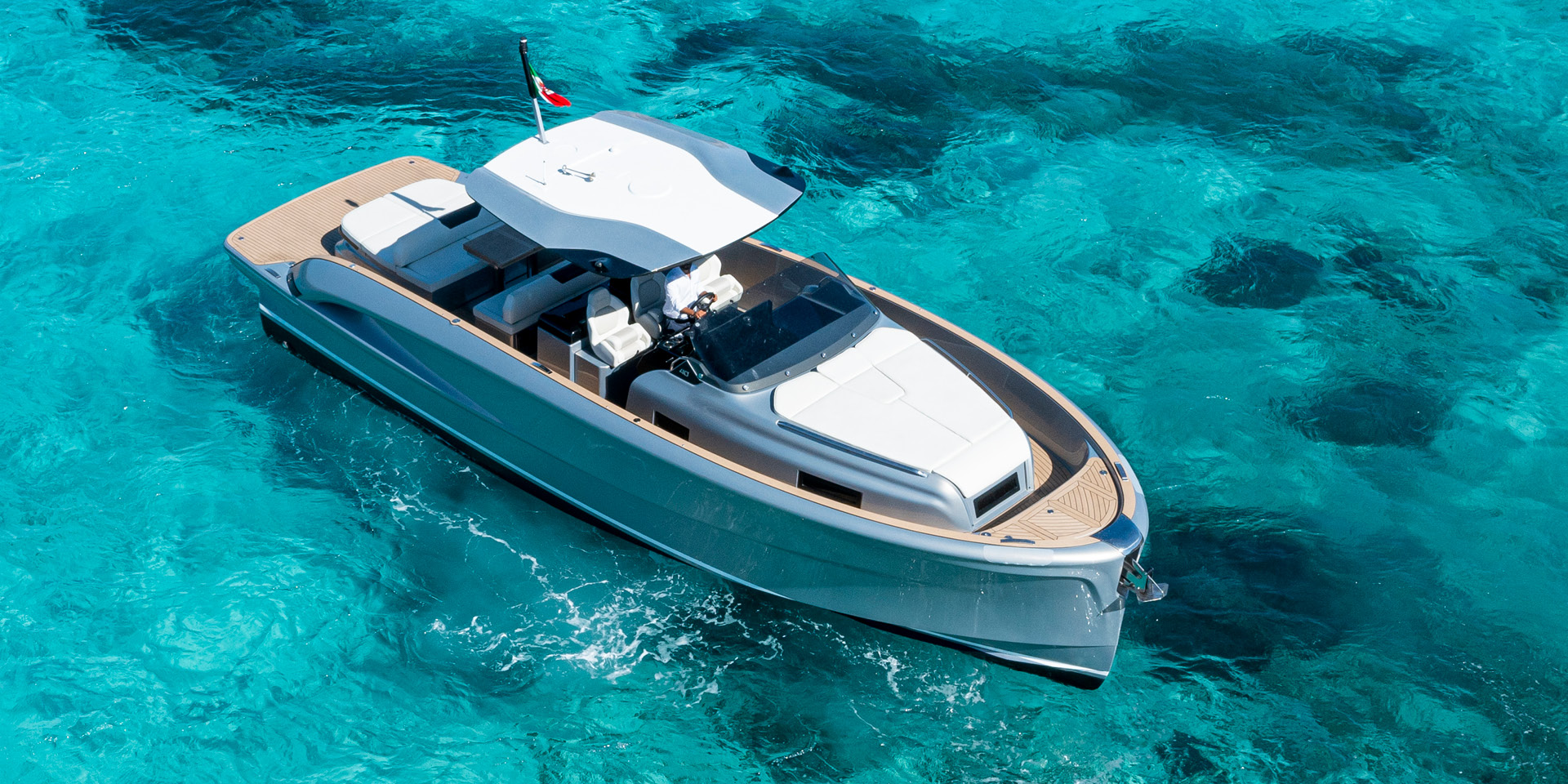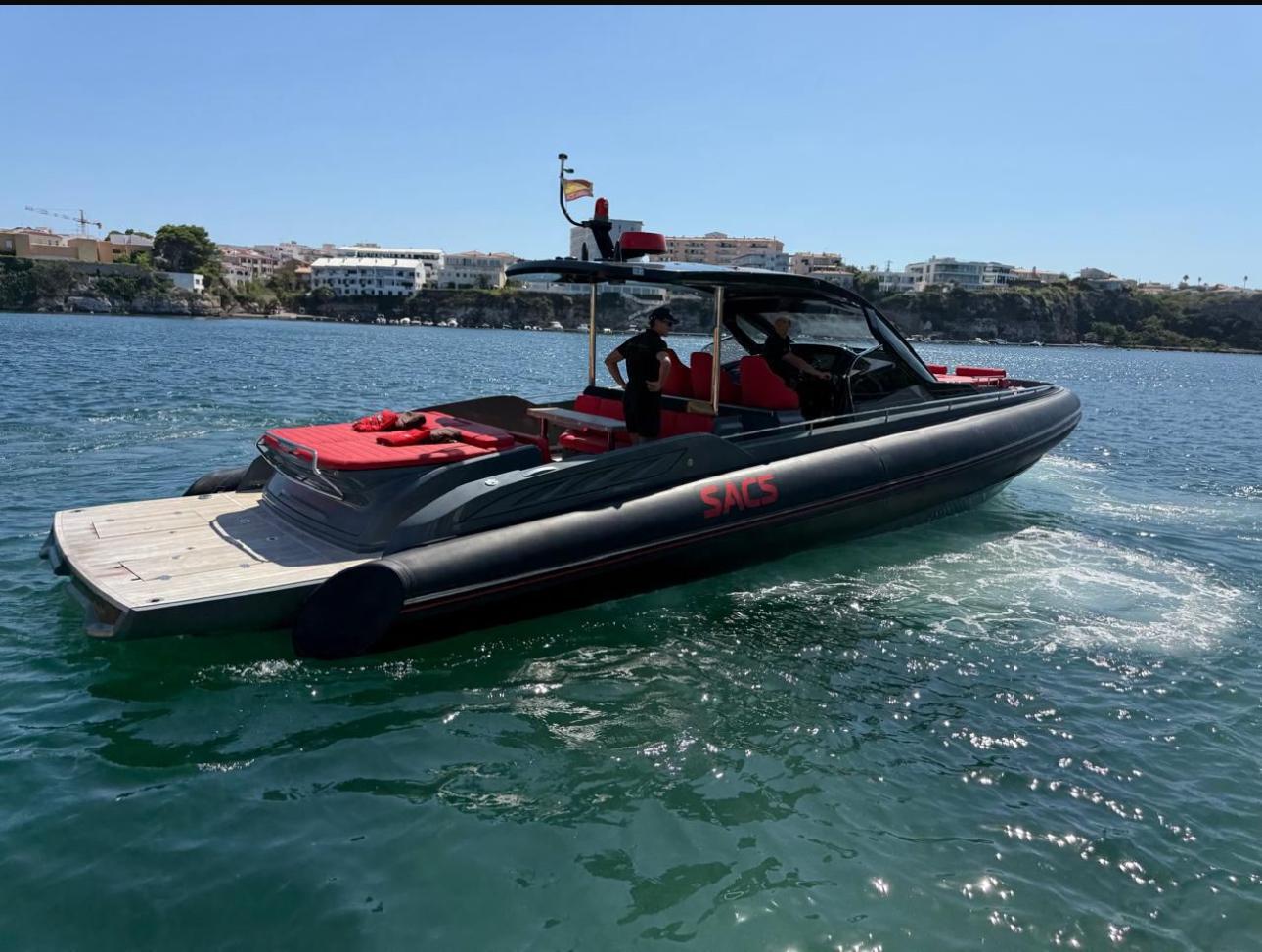


De Antonio and Pardo are often cited among the most desirable brands in the premium walkaround market.
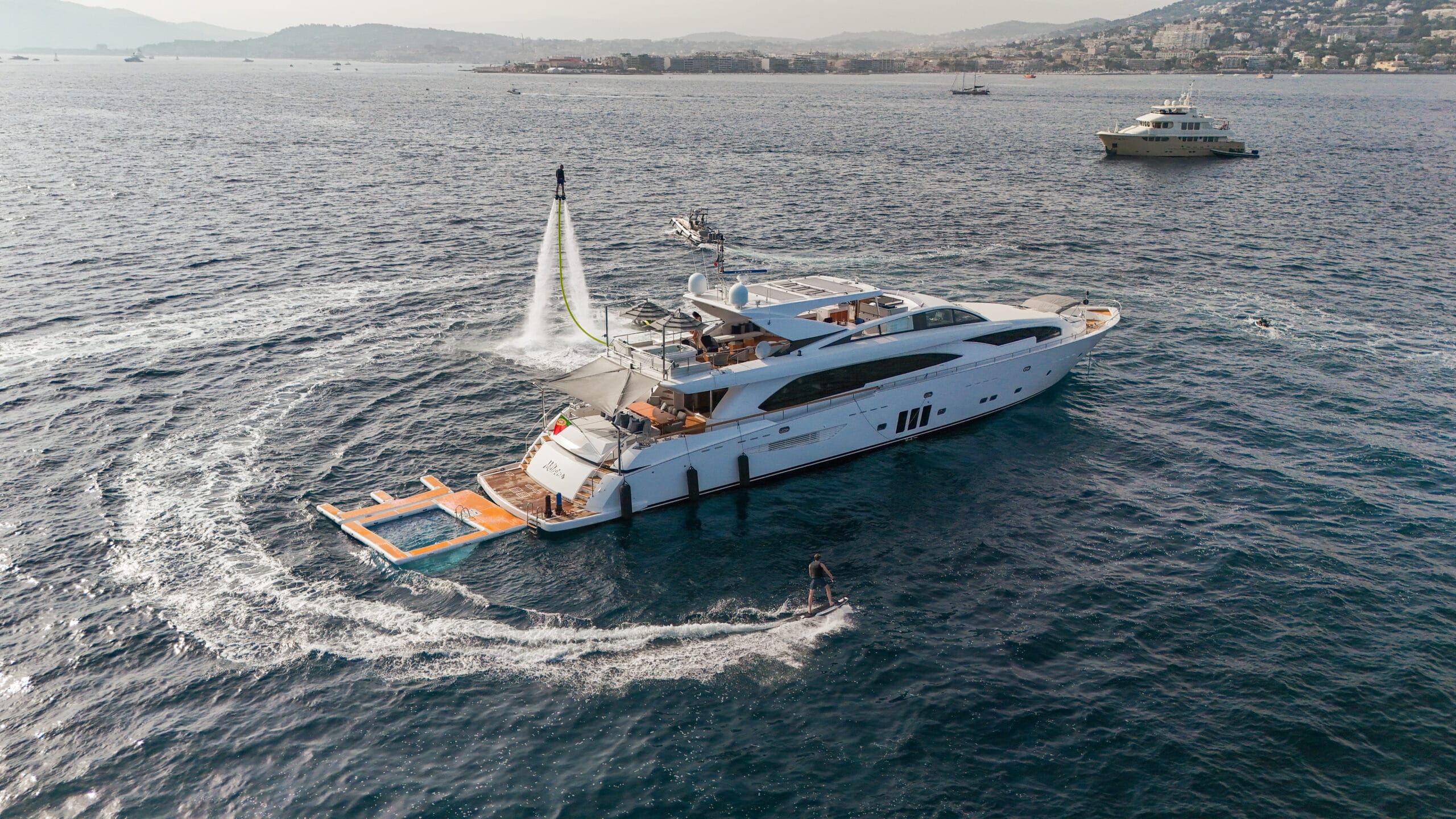
They appeal to a close clientele: owners who want to sail quickly, entertain comfortably, and fully enjoy the anchorages of the French Riviera.
However, they do not offer exactly the same vision of the boat.
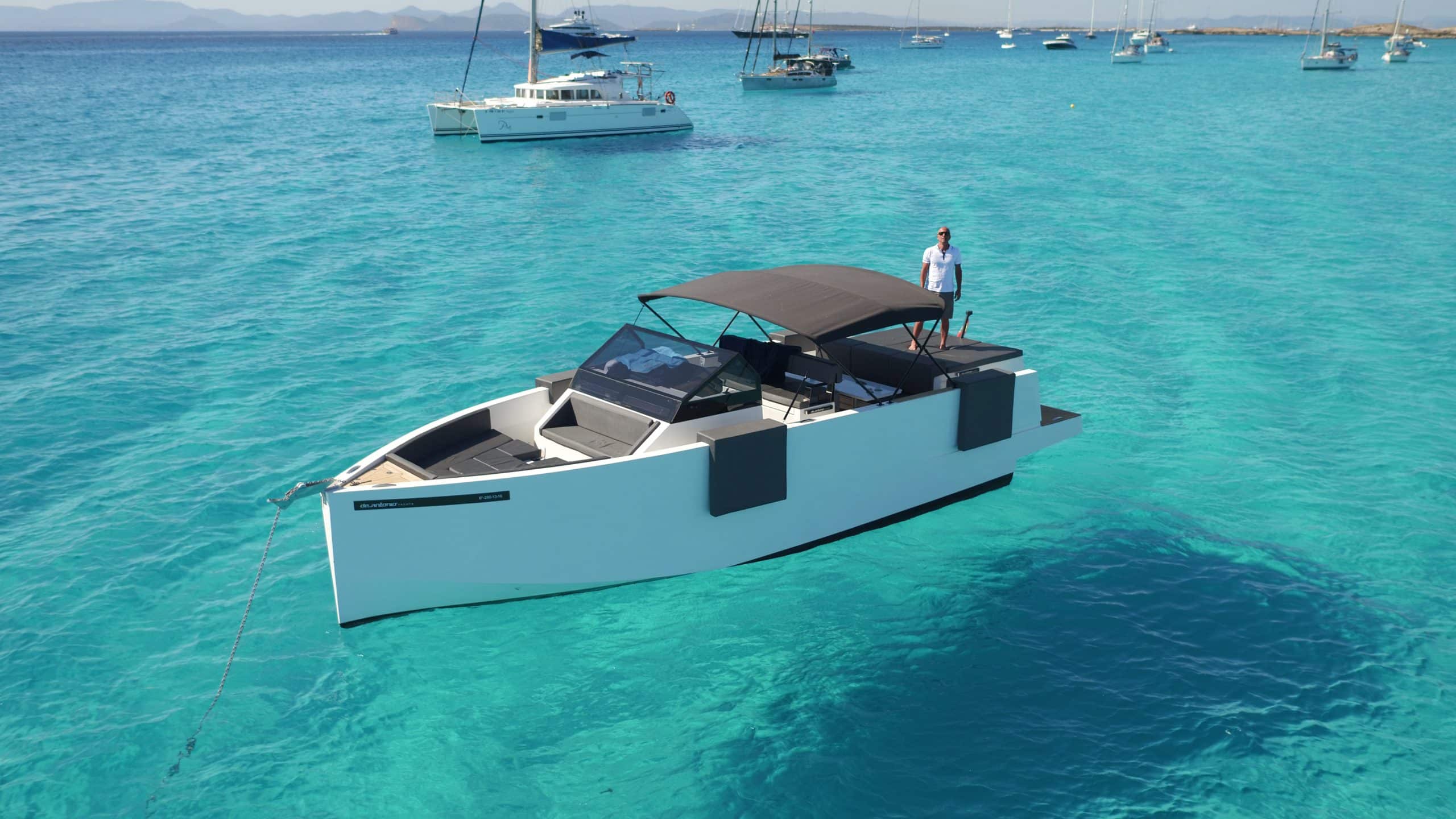
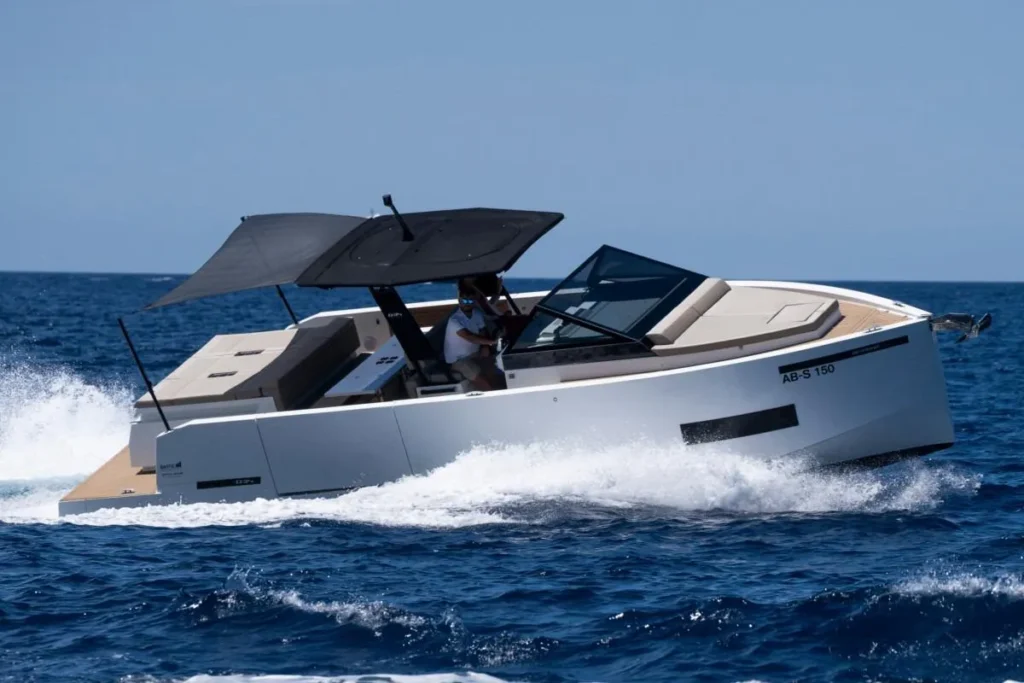
De Antonio Yachts is a relatively new Spanish brand, built around a strong innovation: concealing the outboard engines under a large aft deck to free up the deck space and interior volumes.
Pardo Yachts draws on the industrial experience of Cantiere del Pardo, an Italian shipyard founded in 1973. Its identity is more focused on design, onboard living quality, and the creation of a range capable of accompanying an owner from dayboats to cruising yachts.
Antonio seeks to radically optimize the boat.
Pardo aims to transform the boat into a brand experience.
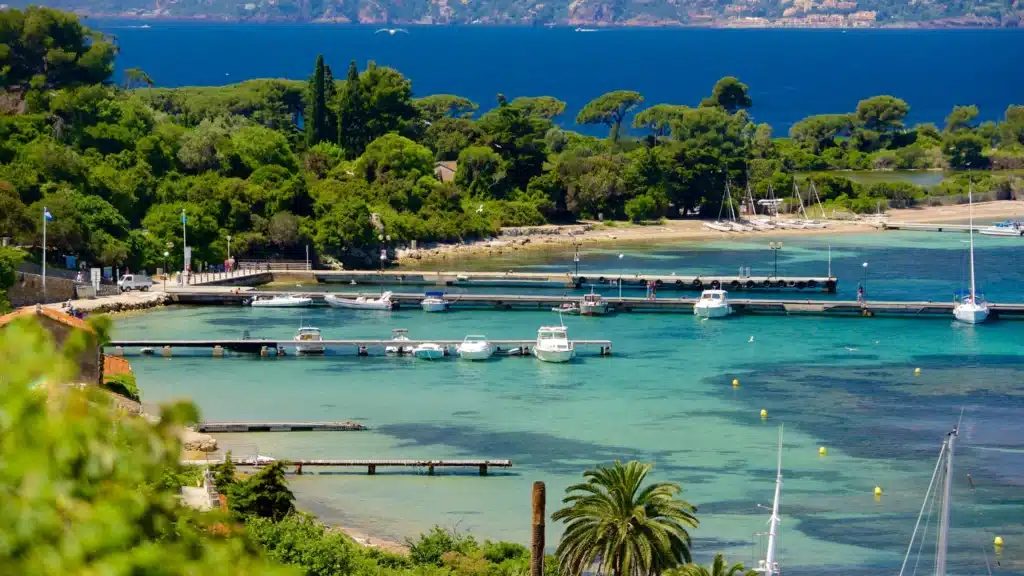
The question then is not which brand is objectively the best, but which one best suits your way of navigating between Cannes, Monaco, Saint-Tropez, and the most beautiful anchorages in the Mediterranean.
From Antonio and Pardo: Two stories that explain their boats
De Antonio Yachts was founded in Barcelona in 2012.
From its very first models, the brand sought to challenge the traditional organization of motorboats. Rather than choosing between the advantages of outboard motors and the elegance of an open stern, it decided to combine the two.
The engines are installed under a rear structure that becomes a sunpad, swimming platform, and a natural extension of the cockpit.
This idea has gradually become the signature of the entire range.
Pardo Yachts has a different origin.
The motor yacht brand was launched by Cantiere del Pardo, an Italian builder active since 1973 and historically recognized for its Grand Soleil sailboats.
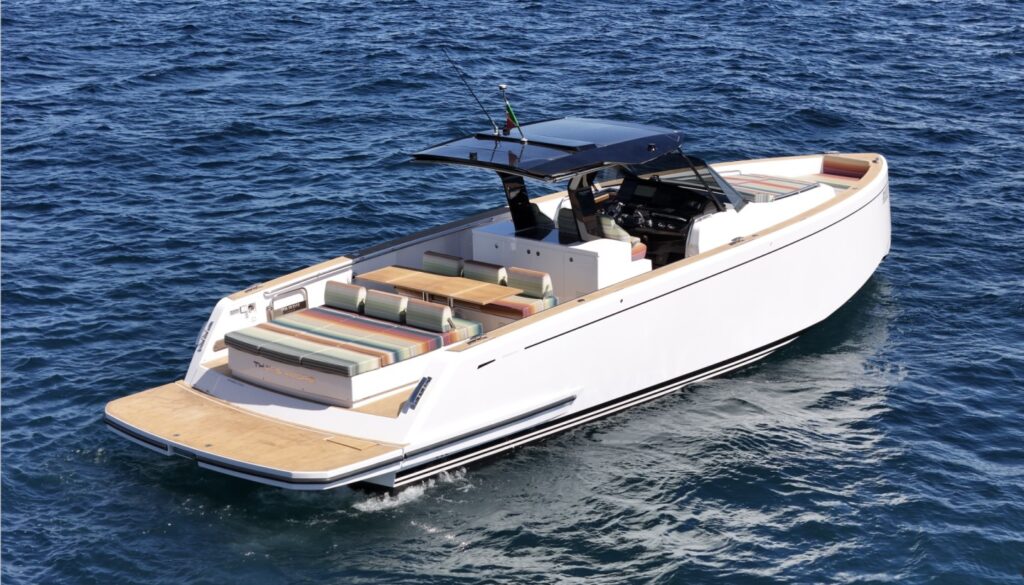
The launch of the Pardo 43 in 2017 marked the beginning of the brand's motorboat adventure and quickly established a new silhouette on the market: inverted bow, walkaround deck, central cockpit, and instantly recognizable Italian lines.
This difference in origin continues to influence both manufacturers.
De Antonio has the culture of a young brand born to solve an architectural problem.
Pardo transforms decades of nautical experience into a broader brand universe.
One was born of innovation. The other transformed a legacy into a new identity.
From Antonio or Pardo: quick comparison of the two brands
| Criterion | De Antonio Yachts | Pardo Yachts |
|---|---|---|
| Origin | Barcelona, Spain | Italy |
| Creation | 2012 | Engine brand launched in 2017 by a shipyard founded in 1973 |
| Signature technique | Hidden outboard motors | Diesel Volvo Penta IPS on a large part of the range, with outboard versions |
| Aesthetic signature | Minimalism, clean lines, and a very open bridge | Inverted bow, Italian design, and a stately presence |
| Philosophy | Maximize every available meter | Create a coherent onboard living experience |
| Dominant program | Dynamic dayboat, weekend trips, and fast cruising | Walkaround, reception, and cruise |
| Evolution in the range | The same architecture pushed to the extreme | Walkaround, GT, and Endurance |
| Buyer Persona | Sensitive to innovation, performance, and optimization | Sensitive to design, reception, and branding |
| Our reading | The most ingenious brand | The most prestigious brand |
This table does not designate a winner.
It mainly shows that the two brands do not have the same center of gravity.
De Antonio Yachts: Architecture Before Tradition
De Antonio succeeded by starting from a constraint usually considered inevitable.
On outboard motorboats, the engine housings typically occupy the entire stern. They limit the swim platform, obstruct the view of the sea, and sometimes reduce freedom of movement.
De Antonio chose to hide them.
The engines remain outboard motors, but they are installed under an aft structure integrated into the overall boat design.
The stern can thus become a living space in its own right.
This solution is much more than a visual effect.
It influences the cockpit layout, the spaces below deck, access to the swim platform, and how guests move between the bow and the stern.
On a D36, a D42, or a D50, the first impression often comes from the difference between the boat's actual length and the space it seems to offer.
Antonio doesn't just aim to build large spaces.
The brand seeks to avoid wasted space.
A range built around the same idea
De Antonio's technical consistency is one of its main strengths.
The range notably includes the E23, D29, D32, D36, D42, D50 Open, D50 Coupe, and D60.
From the compact dayboat to the 60-foot yacht, the shipyard continues to develop the same principle: hidden outboard engines, a spacious outdoor deck, and high performance.
The owner who goes from a D36 to a D42, then to a D50, does not completely change their philosophy.
It features a familiar architecture, more volume, and greater customization options.
The D60 pushes this logic to four hidden outboard engines developing, according to the shipyard's announced data, a total power of up to 2,400 horsepower and a top speed of 46 knots.
These figures naturally depend on the engine, load, installed equipment, and navigation conditions.
Discover the Available from Antonio for sale and compare their engines, equipment, and configurations.
A brand particularly suited for active days
Antonio's philosophy is particularly well-suited for dynamic use on the French Riviera.
Departure from Cannes in the morning.
First swim in front of Sainte-Marguerite Island.
Lunch at Cap d'Antibes.
Then navigate to Villefranche-sur-Mer or Monaco before returning to port.
In this program, the boat is not just a place to spend the day.
It becomes a way to multiply destinations.
The available power, the directness of outboard engines, and the often shallow draft of several models favor this way of navigating.
The owner really uses the boat's performance.
He easily changes anchorage and adapts the day according to the weather, the guests' desires, or the crowds on the coast.
The Limits of Philosophy By Antonio
Architectural optimization doesn't mean that every De Antonio will automatically be simpler or more economical to operate.
The presence of three or four engines on some models implies several units to maintain.
The integration of outboard motors under the aft deck must also be taken into account during technical operations.
Accessibility, engine hours, electronic controls, and the operation of moving parts must be carefully checked on a used unit.
High power ratings can also lead to significant consumption when the boat is used at high speeds.
It would therefore be incorrect to automatically present De Antonio boats as more economical than a Pardo with diesel engines.
Consumption depends on the hull, power, speed, load, sea state, and general maintenance.
Pardo Yachts: Building a universe before building a simple boat
Pardo has another strength.
The brand has succeeded in creating an immediately identifiable visual language.
Inverted bow.
Freeboard marked.
Sculpted T-top.
Pontoon boat walkaround.
Cockpit facing the reception area.
Even from a distance, a Pardo remains recognizable from the quay or from another boat.
The Pardo 43, launched in 2017, played an essential role in this brand building.
It allowed the Italian shipyard to establish a vision of the walkaround that combines performance, outdoor circulation, and quality of life at anchor.
The model then became a benchmark for the segment, before evolving into a modernized new generation.
A wider range of uses
Pardo no longer limits itself to dayboats.
The Walkaround range includes the P38, P43, and P50 models, as well as the P38R and P43R outboard variations.
The shipyard also announces a future P75 intended to extend this philosophy to a larger format.
The range continues with the GT52, GT65, and GT75 models, followed by the Endurance E60 and E72.
This width constitutes a significant strategic difference with De Antonio.
A boat owner can enter the Pardo universe with a sporty walkaround, move up to a more protected GT, and then choose an Endurance designed for extended voyages.
The overall style is evolving, but the identity remains recognizable.
Pardo therefore does not solely perfect a technical concept.
The brand is building a true ownership journey.
Discover the Brown for sale and compare the different generations, engines, and configurations offered.
A more confident presence on the water
At comparable dimensions, a Pardo can give a denser and more established impression.
This impression stems in particular from the ship's silhouette, its freeboard, the arrangement of its spaces, and the quality of its finishes.
It remains subjective and should be evaluated by comparing the different models in person.
The boat doesn't necessarily try to look more compact than it is.
He embraces his size and uses it to create several living spaces.
The forward sun pad, central cockpit, and aft platform allow multiple groups to enjoy the boat simultaneously.
This arrangement is especially helpful when you spend most of the day at anchor.
The leopard no longer serves only to reach a destination.
He himself becomes the destination.
The limits of Pardo's philosophy
This higher presence can lead to more constraints.
Length, width, and displacement affect the price of the berth, handling costs, and general maintenance.
Volvo Penta IPS installations also involve specific operations concerning the engines, stern drives, seals, propellers, joystick, and electronic systems.
Therefore, a buyer primarily looking for a compact, fast boat for a few hours of sailing might consider some Pardo models to be larger than necessary.
Pardo doesn't always aim to offer the most compact solution.
The brand aims to offer the most desirable option for a given program.
Hidden Outboards or Volvo Penta IPS: Which Philosophy to Choose?
The powertrain is one of the most significant differences between the two brands.
De Antonio has built its identity around concealed outboard motors.
Pardo remains closely associated with Volvo Penta IPS diesel engines across much of its lineup, although the R models show that the brand is also developing outboard options.
Why Choose De Antonio's Approach?
The hidden outboard design keeps the stern visually uncluttered while eliminating the need for a traditional inboard engine room.
It helps create more interior space and allows the project to offer different power levels.
This solution will be particularly well-suited for a car owner looking for brisk acceleration, dynamic handling, and a very open rear axle.
However, maintenance and replacement follow a process specific to this integration.
They should not be portrayed as automatically easier or less expensive than a diesel system.
Why Choose Pardo Logic?
The IPS diesel engine is often the preferred choice for owners who regularly embark on extended voyages and are looking for an experience more akin to that of a traditional yacht.
The swiveling bases and joystick also make maneuvering in the ports of Cannes, Antibes, Monaco, or Saint-Tropez easier.
However, this architecture does not automatically guarantee lower consumption or better battery life.
These depend on the hull, installed power, tanks, speed, load, and sea conditions.
Neither solution is universally superior.
The choice must be based on the owner's actual plan.
Which brand has the most consistent product line?
It all depends on how you define consistency.
De Antonio probably has the most technically consistent range.
From D29 to D60, the brand develops the same architecture and progressively perfects its hidden outboard motor concept.
The owner immediately knows what they're looking for: performance, outdoor spaces, and making the most of the available length.
Pardo probably has the most commercially consistent range.
The brand allows for a transition from a day-use walkaround to a GT yacht, and then to an Endurance unit designed for cruising.
Antonio delves into a concept.
Pardo expands a lifestyle.
What brand should I choose for sailing on the French Riviera?
You primarily sail on day trips.
De Antonio has a natural advantage thanks to its open bows, performance, and organization designed to multiply stops.
You spend long hours at anchor.
Pardo becomes particularly convincing thanks to the separation of its spaces and the way the cockpit organizes the reception.
You are looking for the maximum space within a contained length
De Antonio excels at maximizing every available meter.
You're looking for an instantly recognizable silhouette
Pardo has a particularly strong visual identity, built around its inverted bow and Italian lines.
You prioritize speed and acceleration
The various outboard motor configurations from De Antonio are particularly well suited to this expectation.
You want to take longer cruises
Pardo has a broader range to support this program, notably with its GT and Endurance families.
You want to gradually move upmarket.
Pardo today offers the widest range, from walkarounds to large cruising units.
You are open to original technical solutions
De Antonio remains one of the most unique brands in the segment thanks to its hidden engine architecture.
From Antonio or Pardo in the used market
The two brands now benefit from high visibility in the Mediterranean market.
The manufacturer's name alone is not enough to determine the quality of an opportunity.
The year of manufacture, engine, engine hours, equipment, maintenance history, and boat's location directly influence its value.
Things to check on a used De Antonio yacht
- Complete history of each outboard motor.
- Number of hours and maintenance operations performed.
- Status of the steering system and electronic controls.
- Operation of the installation under the rear shelf.
- Condition of the T-top, upholstery, and deck equipment.
- Operation of electrical and hydraulic systems.
Checkpoints for a used Pardo
- History of diesel engines and IPS drives.
- Adherence to maintenance deadlines.
- Condition of propellers, joints, and steering systems.
- Joystick and onboard electronics operation.
- Status of platforms and hydraulic equipment.
- Exact model generation and original configuration.
This last point is particularly important for the Pardo 43.
The historic model launched in 2017 and the current generation do not necessarily have the same equipment, the same layouts, or the same stern.
Therefore, the characteristics of the new P43 should not be automatically attributed to all units available on the second-hand market.
In both cases, independent expertise and a sea trial remain essential before purchase.
From the sea, the difference becomes obvious
On a De Antonio, guests usually notice the ingenuity of the boat.
Invisible engines.
The size of the rear range.
Accelerations.
The ease with which the boat hops between destinations.
On a Pardo, they retain the atmosphere more.
The silhouette.
The cockpit.
The feeling of space.
The way each area invites you to extend your stay.
Antonio impresses with the solution.
Pardo seduced by the staging.
Our opinion: Antonio or Pardo?
De Antonio and Pardo are two particularly consistent brands.
They're simply not appealing for the same reasons.
Antonio will often be the most relevant choice for an owner looking for ingenious architecture, high performance, and maximum space utilization.
The brand offers a clear and immediately understandable vision.
It transforms outboard motorization into an architectural advantage.
Pardo will generally be more relevant to a buyer who places a greater emphasis on brand identity, reception, and the possibility of scaling up to larger cruising units.
The Italian manufacturer doesn't just offer a family of walkarounds.
He builds a continuity between the day boat, grand touring, and cruising.
For very dynamic use between Cannes, Monaco, and Saint-Tropez, De Antonio will often have the edge.
For a more prestigious experience, more focused on time spent on board and a higher level of refinement, Pardo will generally be a more coherent choice.
Antonio is looking to make the boat smarter.
Pardo seeks to make life on board more desirable.
From Antonio or Pardo: compare the units actually available
CLAPI BOATS assists you in comparing models, engines, equipment, operating costs, and port availability options on the French Riviera.
FAQ – De Antonio or Pardo
What is the main difference between De Antonio and Pardo?
De Antonio primarily develops outboard motor boats with hidden outboards, focusing on optimization and performance. Pardo offers a more diverse range, based on Italian design, covering Walkaround, GT, and Endurance segments.
Which brand is the oldest?
De Antonio Yachts was founded in Barcelona in 2012. Pardo Yachts launched its motor venture in 2017, but belongs to Cantiere del Pardo, an Italian shipyard active since 1973.
Which brand is the sportiest?
De Antonio generally has the most direct character thanks to its multi-outboard engine configurations and high power levels. Actual performance, however, depends on the model, engine, load, and cruising conditions.
Is Pardo better suited for cruising?
Pardo offers a wider range for cruising thanks to its GT and Endurance models. The Walkarounds remain oriented towards day trips and weekends, while the GT and Endurance models allow for longer stays.
Which brand offers the most space?
Antonio often optimizes space more within a given length. Pardo offers a range that goes higher in dimensions and can provide more generous volumes depending on the model compared.
Are De Antonio outboard engines easier to maintain?
Not necessarily. They follow a different maintenance and replacement logic than a diesel IPS installation. Their integration under the aft deck, the number of engines, and their accessibility must be studied on each model.
Does Pardo only offer Volvo Penta IPS engines?
No. The IPS diesel powertrains occupy an important place in the range, but Pardo also offers outboard versions, notably the P38R and P43R.
What brand should I choose for a trip between Cannes and Saint-Tropez?
De Antonio will be particularly suitable for a dynamic itinerary with several stops. Pardo will often be more suitable for a day primarily dedicated to entertaining and time spent at anchor.
Which brand sells best?
Resale value depends more on the model, condition, year, engine, engine hours, and maintenance history than on the brand name alone. Pardo benefits from a highly recognized identity, while De Antonio attracts buyers looking for a specific technical architecture.
Antonio or Pardo for a first yacht?
De Antonio can be particularly coherent for an owner looking for a fast, intuitive boat primarily used for day trips. Pardo will be more suitable for someone who wants to prioritize entertaining, overnight stays onboard, and a future upgrade.