

The Monaco circuit is 3.337 kilometers long. It's the shortest on the F1 calendar, the slowest in terms of average speed, and by far the most difficult for overtaking. For decades, experts have maintained that a modern race on this track is a technical aberration, too narrow, too winding, and too static to produce the spectacle that Formula 1 seeks everywhere else. And yet, the Monaco Grand Prix remains the most watched, most coveted, and most mythical race on the calendar. Since 1929. Almost without interruption.
In Monaco, people don't just come to see a race. They come to see a world. This paradox has a simple explanation: in Monaco, the race isn't the main event. The show is what happens on the harbor. And the harbor, since the first Grand Prix, has always been there.
1929: The Race That Shouldn't Have Been Organized
In 1928, the Automobile Club de Monaco was looking for an event to justify its existence. Antony Noghès, a cigarette manufacturer and automobile enthusiast, proposed a simple and audacious idea: to organize a race on the very streets of Monte Carlo. Not on a dedicated circuit, but on the roads that Monegasques used every day. The project was deemed too ambitious, too dangerous, and likely impossible to organize. Noghès pushed it through anyway.
On April 14, 1929, 16 pilots launched themselves for 100 laps of a circuit laid out through the harbor, narrow streets, and hairpin turns of the Rock. William Grover-Williams in his Bugatti T35B faced Rudolf Caracciola in his Mercedes, agility against brute power. Williams won. What no one noticed that day: in the background of the first photos of the race, behind the turns along the harbor, sailboats swayed in the water. The harbor had always been there. It had been there since the very first wheel turn.
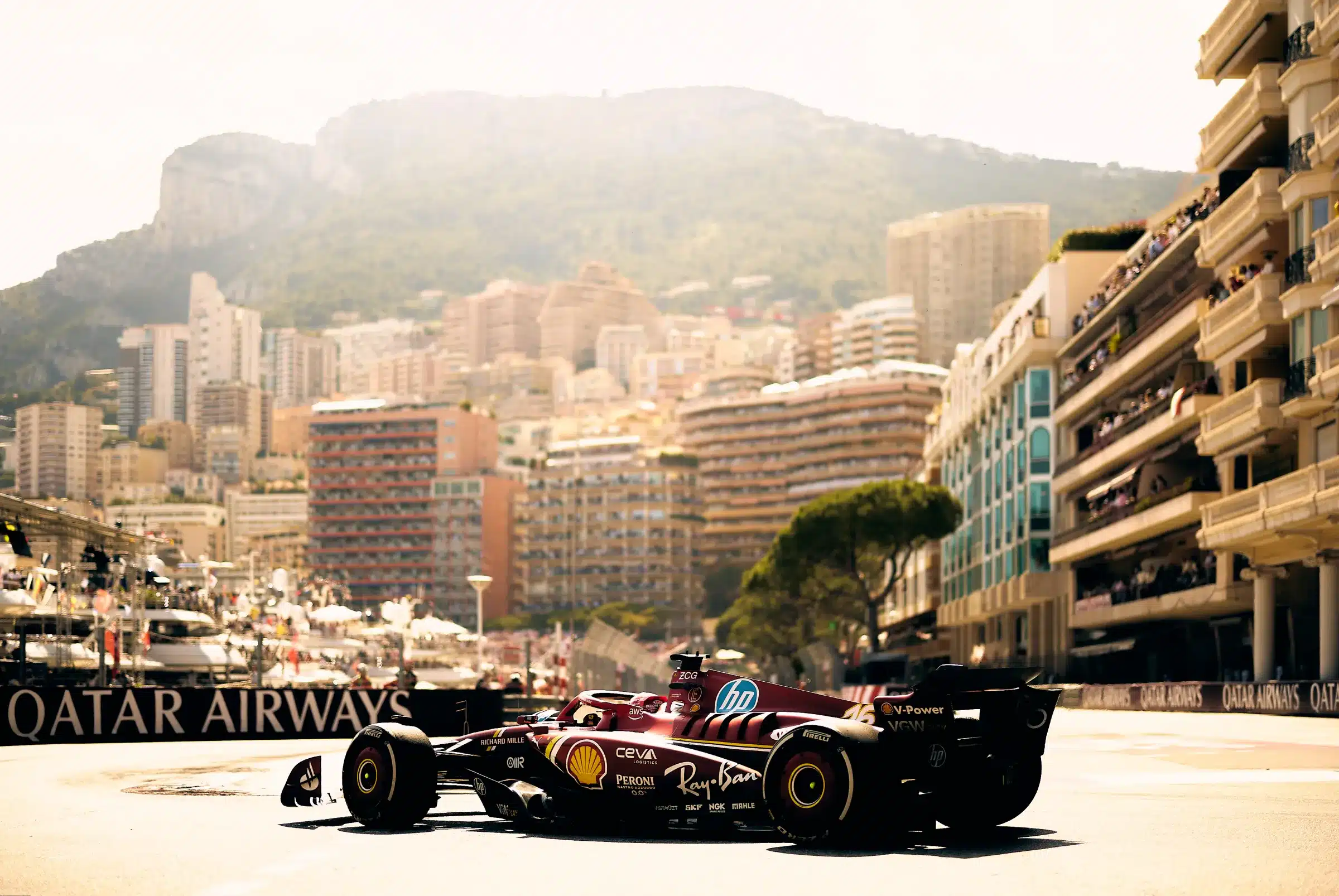
The port that watched the race
In the 1930s and 1940s, Port Hercules was not yet what it is today. The boats moored during the race were cruising sailboats, a few yachts belonging to the principality's wealthy families. No one had come specifically for the race. They were there because they were always there. The Grand Prix passed in front of them.
This trend gradually reversed in the 1950s and 1960s, as the race gained prestige and the Riviera became the playground of the international jet set. Boats began to be brought in specifically for the weekend. Sailboats gradually gave way to the first motor yachts, which were taller and offered better visibility of the circuit. In the 1970s and 1980s, designs changed radically: Jon Bannenberg, the naval architect who revolutionized the aesthetics of modern superyachts, began delivering units, some of which are still benchmarks today. These boats appeared in Monaco for the GP, just as people went to show off at the Opera.
The 1990s marked the definitive shift. Yachts no longer watched the race from the back of the harbor; they moved closer. The most sought-after berths became those in Zone 1: stern facing the circuit, mere meters from the track. Some of these spots didn't change owners for years. They were passed down, negotiated off-market, sometimes reserved even before officially having a boat to put in them. During the Grand Prix, some quay spots reach levels well beyond the suites of the most exclusive Riviera palaces, for just a few days, and not even including the boat itself. The ecosystem is whole, structured, and deliberately opaque.
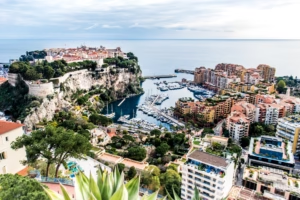
In 2025, 202 yachts were counted in and around Monaco on race day, a record. Among them, 115 units over 24 meters were docked in Port Hercule, along with showstoppers like Jeff Bezos' Koru (125 meters) and Kismet (122 meters). Each year, the harbor seems to grow even larger than the race itself.
The legends the circuit has created
Monaco doesn't just create a show. It creates myths. And the myths here have proper names.
Juan Manuel Fangio won the Monaco Grand Prix in 1950, the first season of the Formula 1 World Championship. He won again in 1957. In between, he forged a relationship with this circuit that drivers of his generation describe as unique: Monaco demands a reading of the road that no other track requires. You don't drive Monaco like you drive Spa or Silverstone. You memorize it, you integrate it, you become it.
In 1955, an incident that could have turned into a tragedy: Alberto Ascari, the reigning world champion, went off the track at the harbor chicane and plunged into the port's waters. He swam out, lightly injured, before the eyes of spectators and boats moored a few meters away. Four days later, he died in a test accident in Monza, unrelated to Monaco. The harbor had almost claimed him.
Then came Senna. Ayrton Senna won the Monaco Grand Prix six times: 1987, 1989, 1990, 1991, 1992, 1993. Six official victories. But perhaps the most memorable was in 1984, which he did not win. On that day, Senna was leading by 57 seconds over Alain Prost when the race stewards stopped the race in pouring rain. The result was frozen at the previous lap. Prost was declared the winner with half points. Senna never accepted it. In 1992, he achieved what many consider the boldest overtake in GP history: Mansell, who had dominated the entire season, pitted too late to change his tires, thinking he had enough of a lead. Senna caught up to him in a few laps and overtook him in the final corners. Mansell never forgave him.
Senna described Monaco in a near-trance state. The circuit ceased to be a technical problem and became something more instinctive, more physical. He said he went faster than he thought he was capable of, as if the track dictated the trajectory rather than the other way around. No one since has established the same relationship with that circuit.
Until 2024. In that year, Charles Leclerc, from Monaco, born in Monte Carlo, having grown up just a few hundred meters from the circuit, finally wins his home Grand Prix. Before him, no driver from Monaco had ever won the Monaco Grand Prix in the modern era. Leclerc had already lost victory in 2021 due to a mechanical problem while leading. He had waited for his moment. And when it arrived, Monaco ceased, for a fleeting instant, to be a backdrop. The arrival didn't have the same energy, nor the same noise as in previous years, something more restrained, almost intimate, as if the city was finally witnessing its own story.
The impossible race, and why no one's complaining
Monaco is the only Grand Prix on the F1 calendar where, theoretically, the finishing order could be announced from the starting grid and be correct eight times out of ten. Saturday's qualifying session dictates Sunday's race. And yet, teams spend fortunes to be there. Drivers unanimously cite it as the most significant victory. Brands fight for visibility on this tiny circuit.
The reason lies in what Monaco is not. Monaco is not a Grand Prix with yachts in the background. It is a global event with a race in the background. It is one of only two Grands Prix in the world, along with Abu Dhabi, where watching the race from a yacht is an established, priced, and ancient practice. The hierarchy is clear for anyone who has been on the harbor on a June weekend: the boats are the subject. The race is the pretext that brings them together.
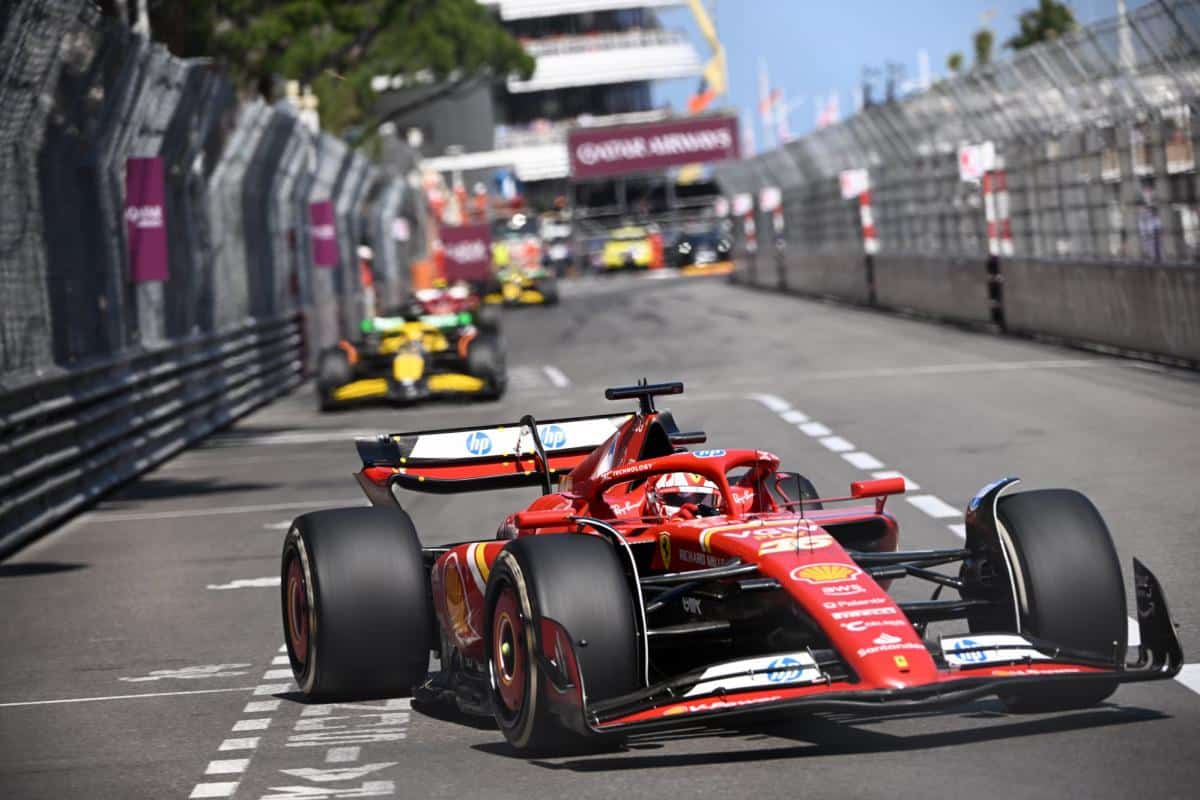
What we see from the port that the stands don't show
The Monaco circuit has a unique feature that all track maps hide: a large part of the layout runs directly along the water. The exit of the tunnel opens onto the edge of the harbor. The harbor chicane, the pit straight, the Anthony Noghès corner at the end of the lap, everything happens just a few meters from the quay. From a yacht moored in Zone 1, the cars exit the tunnel at 280 km/h in full sun after total darkness, brake, negotiate the chicane, and accelerate again. The acoustic effect is different from the grandstands: the sound bounces off the water, curls between the hulls, rises and falls with the wind. It is a sensory experience that exists nowhere else in motorsport.
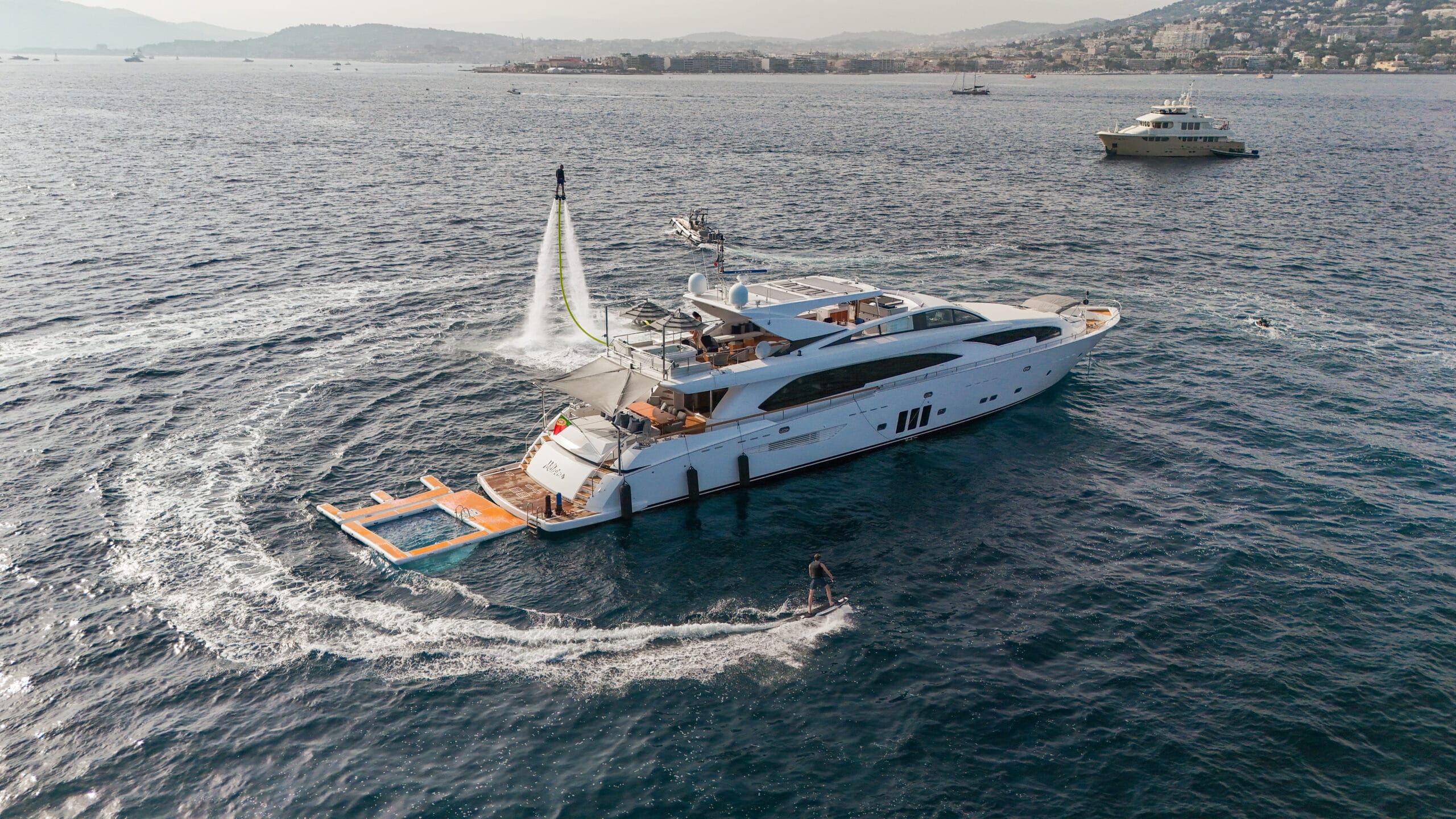
The yachts anchored offshore, those unable to secure a berth in Zone 1, offer a different overview: the entire harbor, the grandstands, the boats in the foreground, the Monte Carlo skyline, and the race as an element of the picture rather than its sole subject. For some, it's the best spot. The Monaco Grand Prix seen from outside the harbor has a composition that no one from inside can see.
From Cannes, Monaco in June 2026
The 2026 Monaco Grand Prix, the 83rd edition, will be held from June 4th to 7th, with the race on Sunday, June 7th at 3:00 PM. The Grand Prix is changing its slot this year: it's leaving its traditional late May slot to move to June, becoming the first European Grand Prix of the season.
From Cannes, Monaco is about a 1.5-hour leisurely sail, depending on the boat and conditions. The route follows the coast, passing Antibes, Cap d'Antibes, Nice, Villefranche, Beaulieu, and Èze, before rounding Cap Ferrat and entering Monegasque waters. Monaco appears from offshore: the rock, the buildings, and the yachts already gathered in the port, week after week, since 1929.
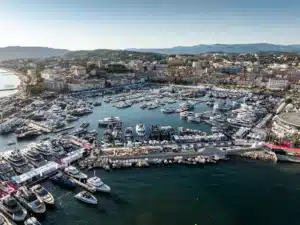
It's one of the most requested events on our calendar. Along with the Cannes Film Festival, the Grand Prix is the event that most heavily influences advance bookings. For a different approach to the 202 superyachts in Zone 1: anchor offshore, watch the race from the water without being in the port's fray, and enjoy the return to sea at the end of the day when the principality empties out. Our page dedicated to Grand Prix Monaco yacht rentals Detail the available formats and availability for June 2026.
FAQ – Monaco Grand Prix by Yacht
Can you watch the Monaco Grand Prix from a yacht?
Yes. Monaco is one of only two Grand Prix races in the world—along with Abu Dhabi—where watching the race from a boat is an established practice. Yachts in Zone 1 (stern facing the circuit) offer a direct view of the tunnel exit and the harbor chicane. Yachts anchored offshore have a panoramic view of the entire harbor.
What are the dates for the 2026 Monaco Grand Prix?
The 83rd edition will be held from June 4 to 7, 2026, with the race on Sunday, June 7 at 3:00 PM. The Grand Prix is leaving its traditional late May slot to move to June, becoming the first European Grand Prix of the 2026 season.
How long does it take to get from Cannes to Monaco by boat?
About 1 hour 30 minutes from Cannes, a few minutes less from Golfe Juan. The route follows the entire coast – Antibes, Nice, Villefranche, Cap Ferrat – before entering Monegasque waters.
How many yachts are attending the Monaco Grand Prix?
In 2025, 202 yachts were counted in and around Monaco on race day, a record. Among them, 115 units over 24 meters were in Port Hercule. The port can accommodate up to 700 boats, including units up to 300 meters.
Who has won the most in Monaco?
Ayrton Senna holds the record with six official victories (1987, 1989, 1990, 1991, 1992, 1993). He was also leading in 1984 when the race was stopped due to rain. Michael Schumacher and Graham Hill each have five victories. Charles Leclerc won the Grand Prix in 2024, becoming the first Monégasque to win his home Grand Prix.
Since when has the Monaco Grand Prix existed?
The first edition took place on April 14, 1929, won by William Grover-Williams in a Bugatti T35B. The race has been held on the same basic circuit for 95 years, making it the oldest Formula 1 circuit still in operation.
Plan your Monaco Grand Prix experience at sea
See also: Yacht Tours Nice to Monaco · Cannes Film Festival by yacht · What is a day on a yacht like?