
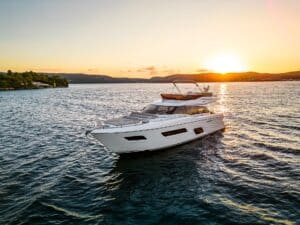

The question almost always comes up: skipper or no skipper? Is it cheaper? Are we freer? The idea of bareboating, renting a boat and setting sail alone, without anyone making decisions for you, has something appealing about it on paper. In practice, on the French Riviera, almost no one does it. And those who have tried quickly understand why.
What the law says: the essentials in two minutes
To operate a motorboat exceeding 6 kW or 6 meters in length in France, a pleasure craft license is mandatory. It's coastal up to 6 nautical miles from a shelter, and offshore beyond that. When bareboat chartering, the renter must hold the appropriate license; otherwise, the rental is illegal, and sea patrols do exist.
«Rentals without a license» exist, but they concern very specific boats: small electric boats, rigid inflatables below legal thresholds, pedal boats. Not yachts. Not 10 to 15 meter RIBs.
With a professional skipper on board, the rules change: they are responsible for navigation. Passengers do not need any license. Commercial charter boats are subject to regular technical inspections and specific insurance. This is a more restrictive framework for the owner, and more secure for the client.
What customers imagine
Those seeking a bareboat charter generally envision three things: more freedom, fewer restrictions, and a lower price. The image is that of the autonomous skipper who weighs anchor when they please, anchors where they please, and returns when they please. Without anyone imposing a schedule.
It's an accurate portrayal in certain contexts. On less frequented destinations, with a familiar boat, for someone who sails regularly. On the French Riviera during peak season, with a boat rented for the first time, in one of the Mediterranean's busiest maritime areas, it's something else entirely. On the French Riviera in the summer, it's no longer a question of freedom. It's a question of mastery.
What the permit doesn't solve
Having a coastal license solves the legal issue. It doesn't solve the actual navigation issue. The French Riviera between Cannes and Monaco in July is one of the densest maritime traffic areas in the Mediterranean: ferries, 60-meter yachts, inflatable boats, jet skis, racing sailboats, hovercraft. Priority rules vary from one port to another. Authorized anchoring areas change depending on the municipality, the season, and the protection of seagrass beds. Some coves are forbidden to anchor in during the summer. Others are only accessible if you know exactly where to look.
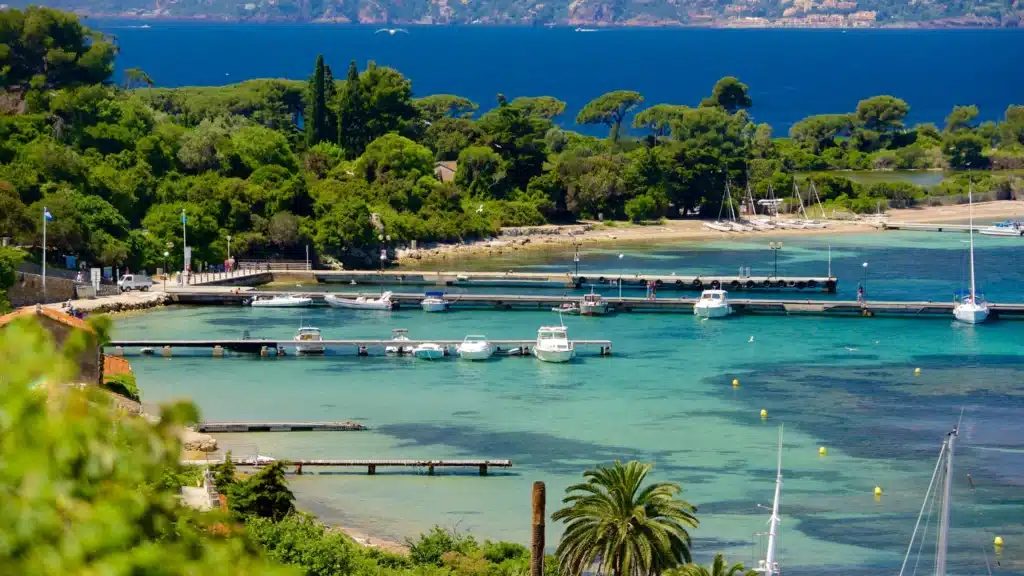
A local skipper who has been navigating this area for several seasons knows all of this by heart. He also knows where spots open up early in the morning in front of the Lérins Islands. Where the clearest water is at Cap d'Antibes. What weather the boat can expect on the return trip if one heads west in the late afternoon. A coastal boating license obtained five years ago doesn't provide this information.
What we really experience on board
The real difference between the two formulas isn't legal. It's experiential.
On a bareboat, you're in charge. Navigation, anchoring, docking maneuvers, weather, fuel management, returning on schedule. You stay focused on sailing. You drink little to no alcohol. You don't go diving while the boat is anchored because you are solely responsible. In other words: you're on a boat, but you're not really experiencing the sea.
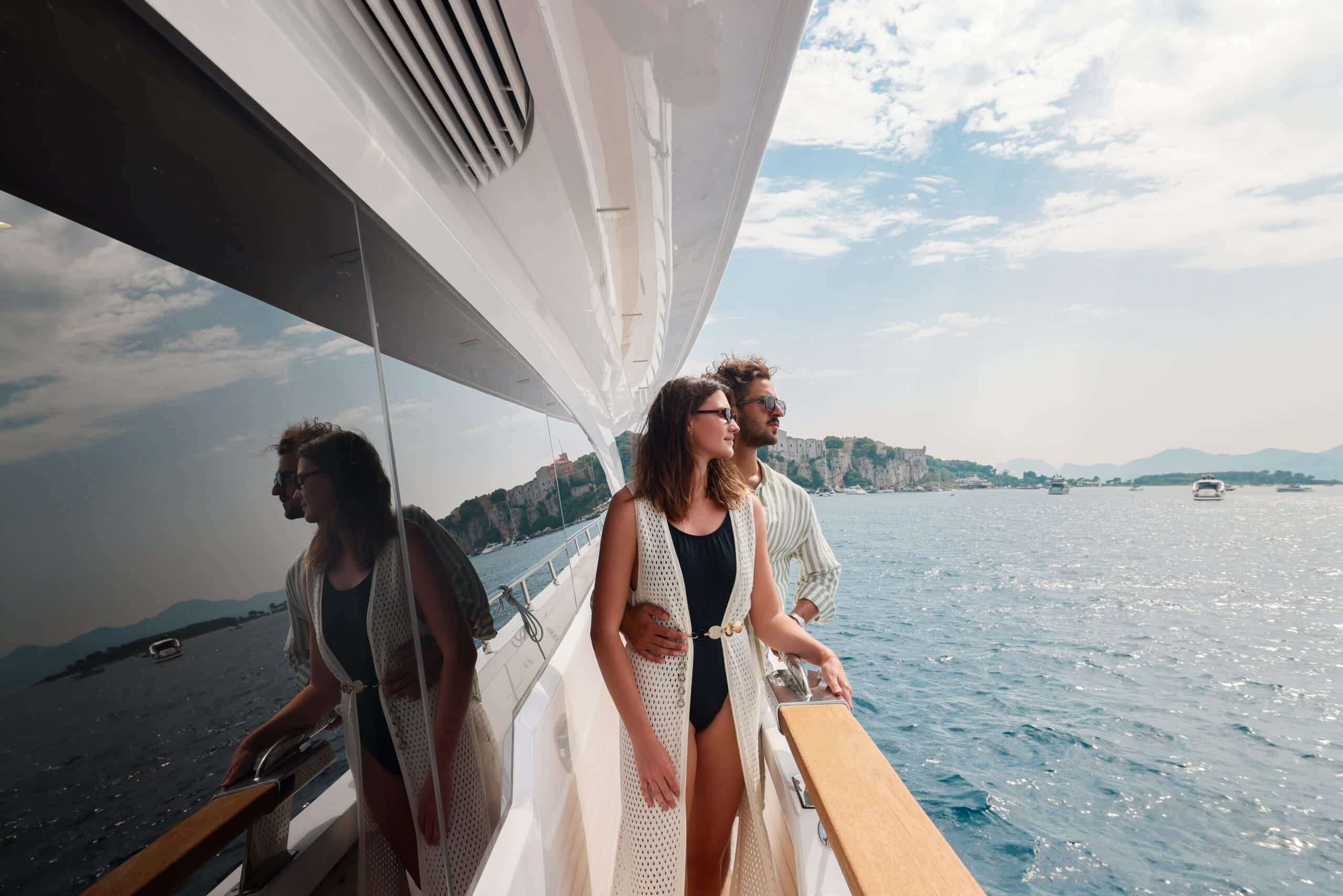
With a skipper, you are a passenger in the fullest sense of the word. You choose the destination and the atmosphere. He takes care of the rest. You can swim during the stop, have a drink at noon, watch the coast go by without thinking about the AIS or anchoring rules. The skipper doesn't just drive the boat, he orchestrates the day.
It's this difference that customers discover once they are on board. And it's why the rare bareboat charterers on the French Riviera who then switch to the skippered formula never go back.
What the numbers say
Bareboat clients on the French Riviera are extremely rare. Within our business, over 95 % of requests include a skipper, and it's not because clients don't have their license. Some are boat owners themselves. They choose a skipper because they've realized that renting a boat and experiencing a day at sea are two different things.
The question «with or without a skipper» always ends up, in practice, being posed in these simple terms: are you coming to sail or to enjoy the sea? Both are valid. They are not experienced in the same way.
What we are proposing
At Clapi Boats, there's no question: all our days include a professional skipper. It's not an option; it's the foundation of what we do. Our skippers know the area from Cannes to Monaco, the anchorages according to the season, the weather conditions, and the preferences of each type of group. They speak French and English.
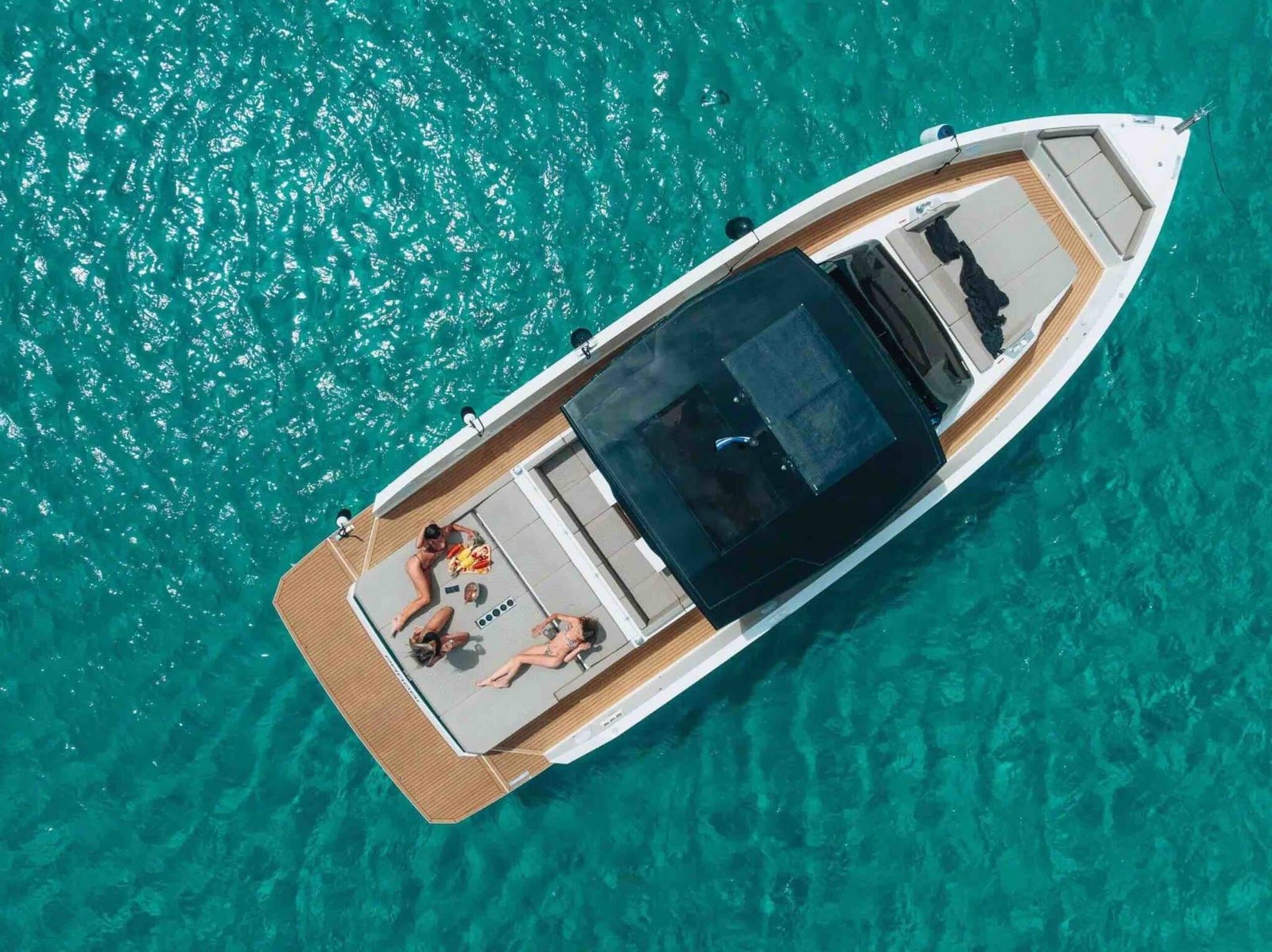
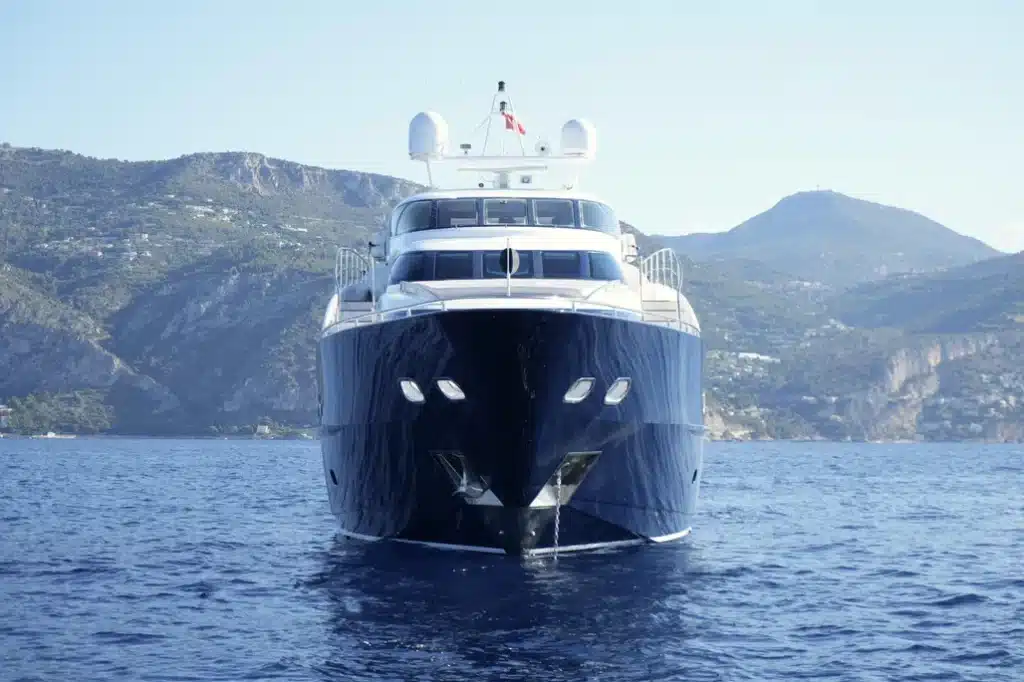
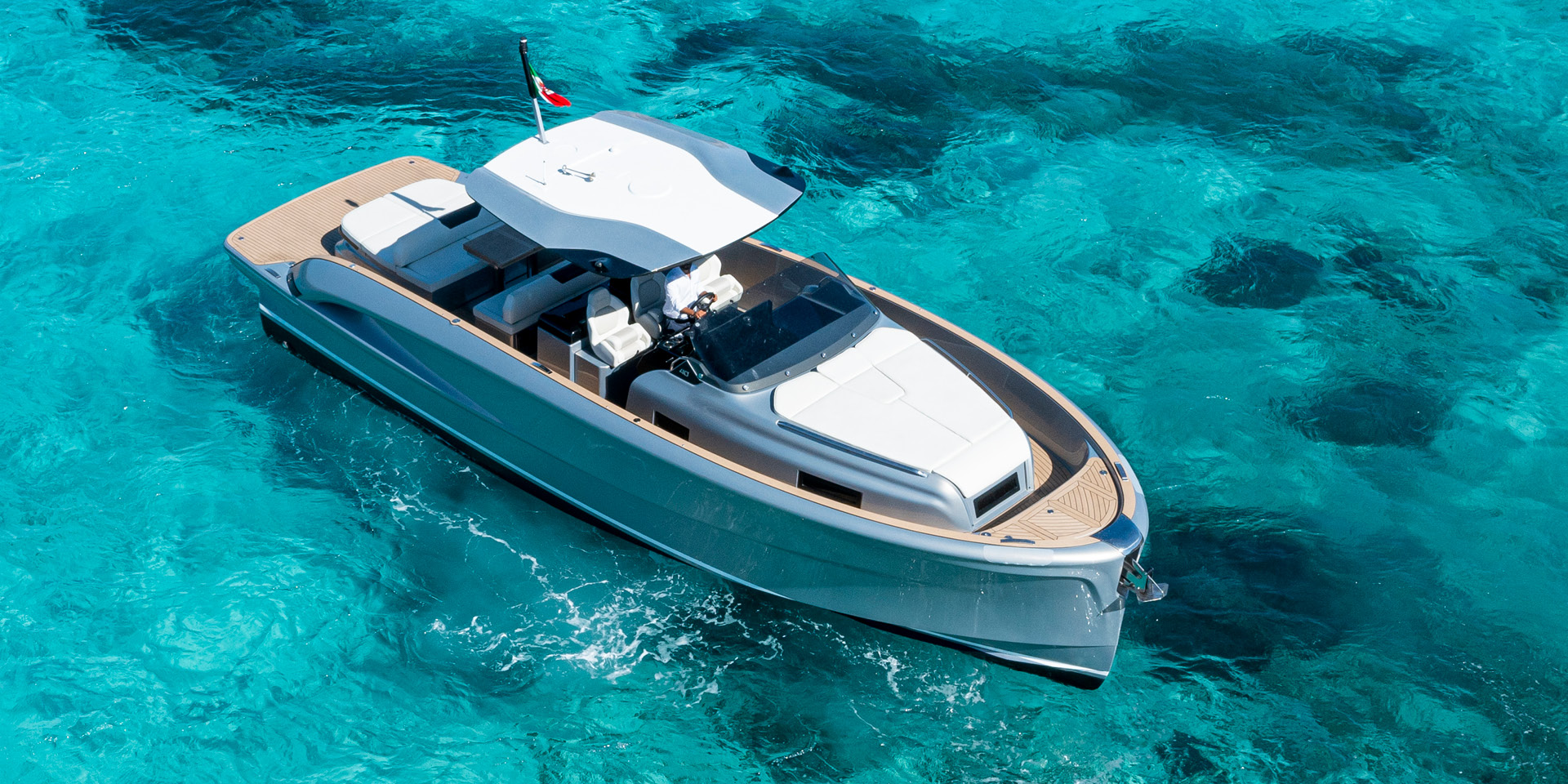
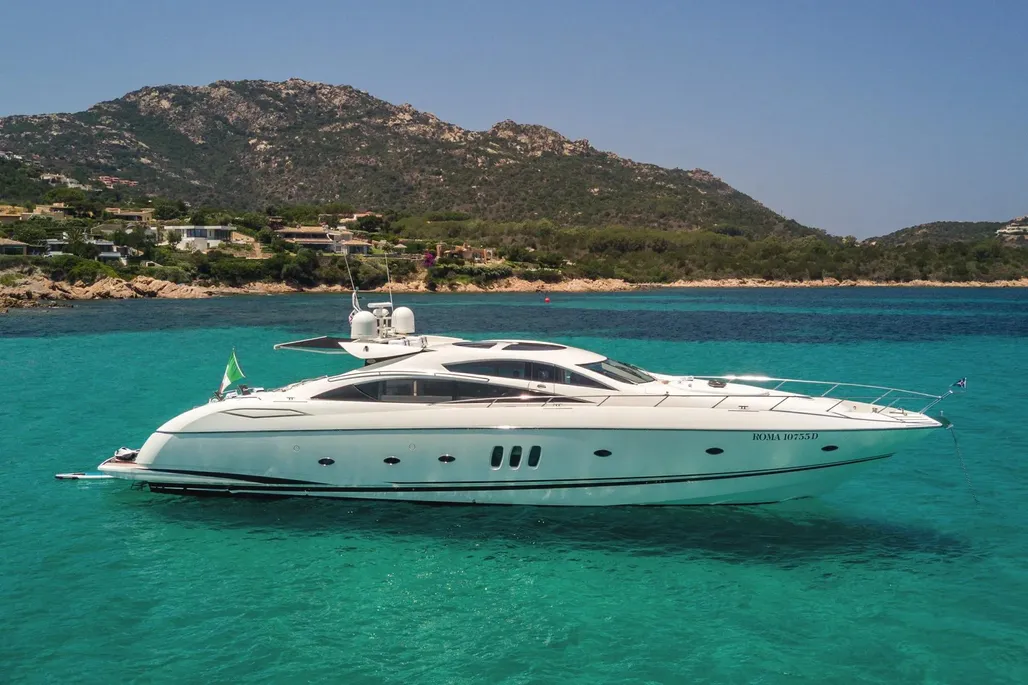
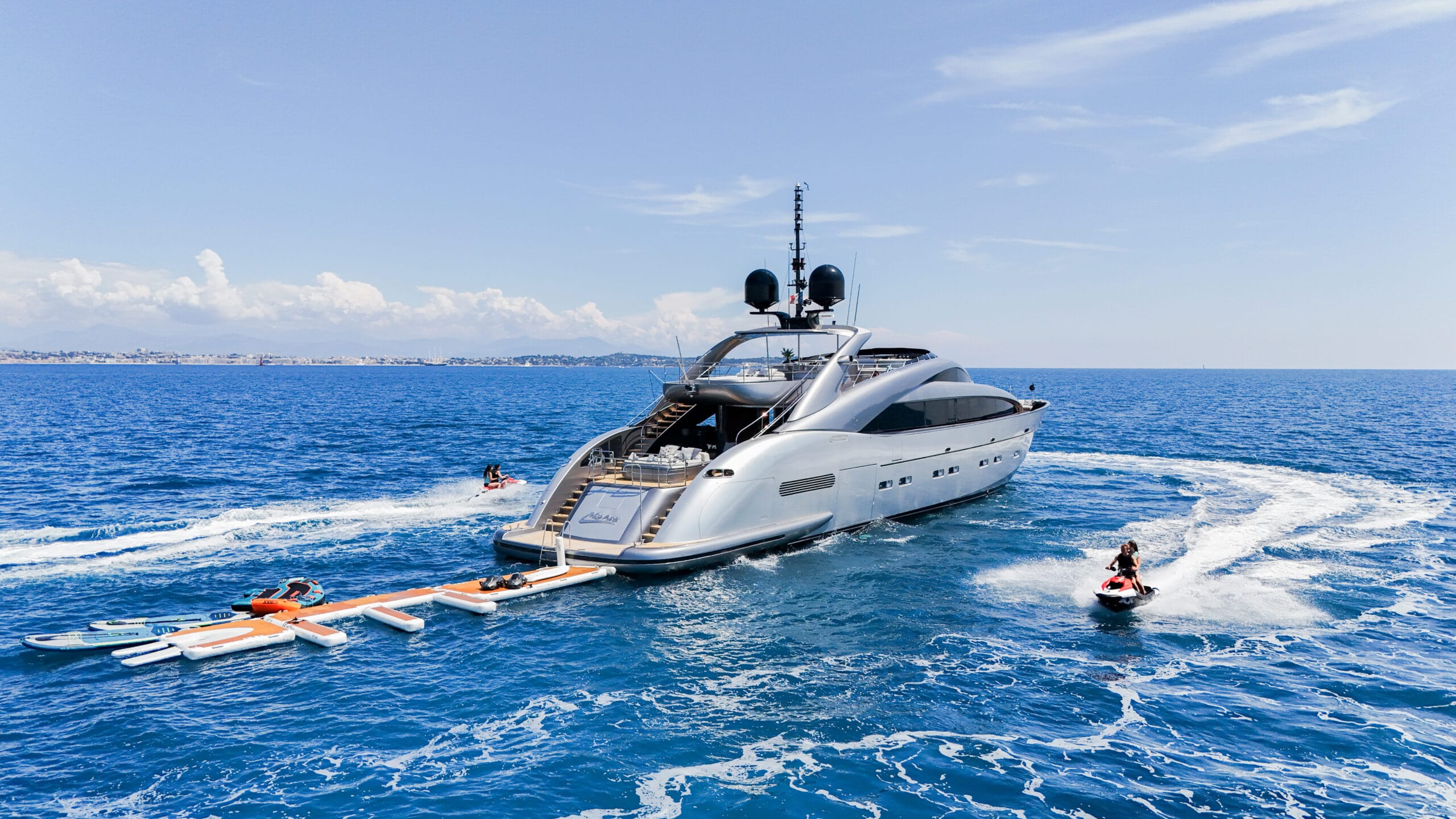
Our boats are inspected and insured commercial charter units, departing from Golfe-Juan and Cannes. All of our models, from dayboats to yachts, are available on our Yacht location on the French Riviera.
On the French Riviera, the sea isn't something you navigate; it's something you experience.
→ Plan your day at sea with a skipper
FAQ – Skippering Yacht Rental
Do you need a boat license to rent a yacht on the French Riviera?
Not if the boat is rented with a professional skipper. The skipper is responsible for navigation, and the passengers do not need a license. On the other hand, for a bareboat rental (without a skipper), the renter must hold a valid coastal license suitable for the boat and the navigation area.
Can you rent a yacht without a license on the French Riviera?
For a yacht or a significant-sized RIB, no, unless a skipper is on board. «Bareboat rental» concerns very specific vessels (small electric boats, boats below legal thresholds). This does not apply to charter boats.
Does the skipper choose the route, or do we?
It's you. You indicate your preferences—Lérins Islands, Cap d'Antibes, Monaco, Saint-Tropez—and the skipper creates the itinerary based on the day's conditions and your schedule. He proposes, you decide. He knows the spots you won't find on Google Maps.
Can you take the helm yourself if you have the license?
On our commercial charter boats, navigation is handled by the skipper – this is a regulatory requirement for passenger transport. Depending on the boats and conditions, some skippers may allow clients to take the helm for portions of the sailing, upon request and at their discretion.