
We think we know how Saint-Tropez became Saint-Tropez. Bardot, Vadim, 1956. That's true. But it's only the third version of the story.
Saint-Tropez was invented three times. Three times by people who arrived by sea and decided to stay. What the gulf shows from a boat is the addition of these three stories, superimposed, visible to those who know where to look.
First invention: a captainless ship (68 AD)
Before it was a village, before it was a name, Saint-Tropez was an anonymous shore of Provence. What changes everything arrives by sea, as it always does here.
Torpes was an officer in the Roman army stationed in Pisa. He converted to Christianity and refused to renounce his faith before Nero. He was beheaded around the year 68. His body was placed in a small boat with a rooster and a dog, who were supposed to devour the remains before they reached anywhere. The boat was pushed out to sea.
She arrives on the shores of Provence. Intact. The inhabitants gather the remains and found a cult around this saint about whom they know almost nothing. The village that develops takes the name Torpes, which becomes, through successive deformations from Latin to Provençal, Saint-Tropez.
Each year, on May 16th, 17th, and 18th, Saint-Tropez celebrates the Bravade, an armed procession where locals parade in period costumes and fire musket volleys in the streets. It is one of the oldest traditional festivals in Provence, and it commemorates precisely this arrival by sea. Thousands of tourists attend this festival each year without realizing they are witnessing the town's founding act being replayed.
Saint-Tropez was therefore founded by a body that arrived from the sea on a boat that no one was steering. This origin says something about the character of the place: it has always belonged to those who arrive, not to those who administer.
Second invention: A Painter and a Storm (1892)
In 1892, Saint-Tropez was a fishing village of about three thousand inhabitants, without a carriage road, accessible mainly by sea. It was known to sailors who sailed along the coast, and to no one else. Paul Signac, a Parisian Pointillist painter, discovered it by accident.
Signac sails along the Mediterranean coast aboard his sailboat, the Olympia. A storm forces him to seek shelter in the gulf. He anchors, goes ashore, and is immediately struck by the light, that particular light of the Gulf of Saint-Tropez, which falls on the pink and ochre facades of the port with a sharpness that the painters of the time did not yet know. He rents a room. He paints. He returns the following year. He buys a villa on the heights of the village, La Hune, and decides not to really leave again.
Signac is a central figure in the Parisian art scene. When he speaks of Saint-Tropez, his friends listen. In 1904, Henri Matisse arrived to spend the summer with him. This stay changed everything: Matisse painted «Luxe, calme et volupté» (Luxury, Calm, and Pleasure) in Saint-Tropez, a canvas considered the founding act of Fauvism, the movement that would revolutionize 20th-century painting. Théo van Rysselberghe, Henri Cross, and others followed. The Musée de l'Annonciade, in the old port chapel, now houses works from this period, paintings created on the quays and in the alleys of Saint-Tropez at that time.
What Signac understood upon docking in the gulf in 1892 was the same thing Torpes had inadvertently pointed out eighteen centuries earlier: this place does something to people. It holds them. The storm that had forced Signac to stop was perhaps the best service the Var had ever rendered him.
Third invention: an actress and a camera (1956)
In 1956, Saint-Tropez was still a fishing village. Known to artists, frequented by a few bourgeois families who had discovered the place through Signac and his circles, but not yet an international destination. Roger Vadim came to shoot a film there. He was looking for an authentic setting, not yet overexposed. He brought with him the actress he had just married: Brigitte Bardot.
«And God... Created Woman» is released in France in November 1956. The film is a moderate success in Europe. In the United States, it becomes a phenomenon: the first French film to gross over a million dollars across the Atlantic. Americans discover Bardot, and with her, this village with colorful facades, this light, this sea. Magazines follow suit. Photographers settle in. Celebrities arrive.
Bardot herself fell in love with the place. She bought La Madrague, a seaside villa, and made it her primary residence for decades. But Bardot didn't just make Saint-Tropez famous. She made it an exportable lifestyle, sun, freedom, the sea, without the protocol of the Cannes Riviera. It was a new idea in 1956. She traveled the world. What's forgotten is that she didn't choose Saint-Tropez because it was famous. She chose it because it wasn't yet, and she did exactly what Signac had done sixty-four years before her: she arrived, she liked it, she stayed.
What the three inventions have in common
Torpes arrived by sea. Signac arrived by sea. The Allies who liberated the city on August 15, 1944, as part of the Provence landings, arrived by sea; French commandos landed on the beaches of the peninsula the night before the major assault waves. And the tourists who arrive today by ferry or private boat from Cannes are doing exactly the same thing, without necessarily knowing it.
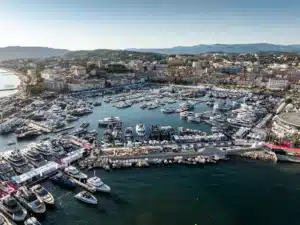
Saint-Tropez is a place that is given by the sea and closed off by land. From the road in summer, the village is a succession of traffic jams, full parking lots, and crowded shuttle buses. From the gulf, it's something else: the 16th-century citadel overlooking the rooftops, the church bell tower visible for several miles, the facades on the port that haven't changed since Signac's paintings. The view Matisse had arriving by boat in 1904 is pretty much the same as the one you have today.
Saint-Tropez from the sea
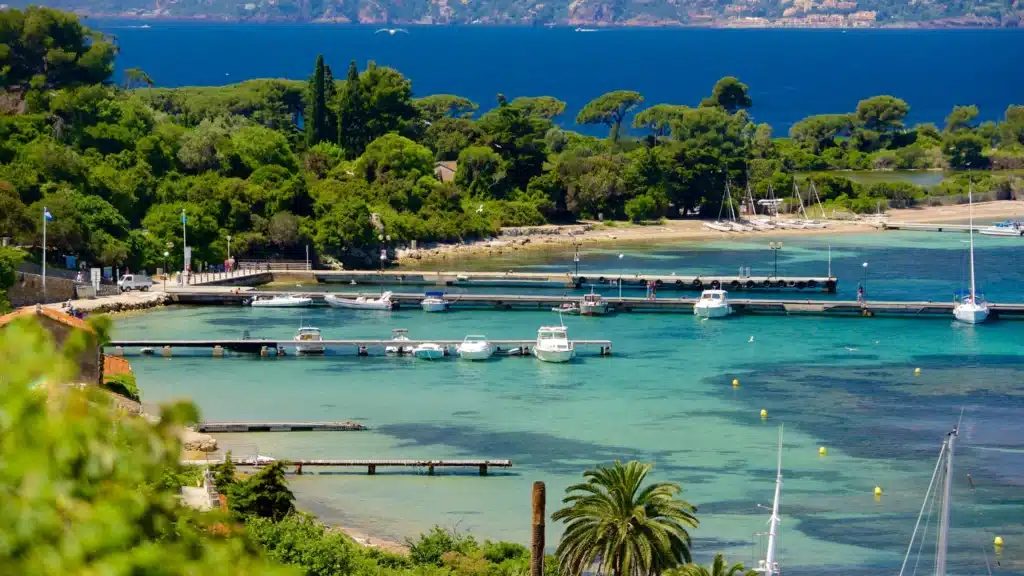
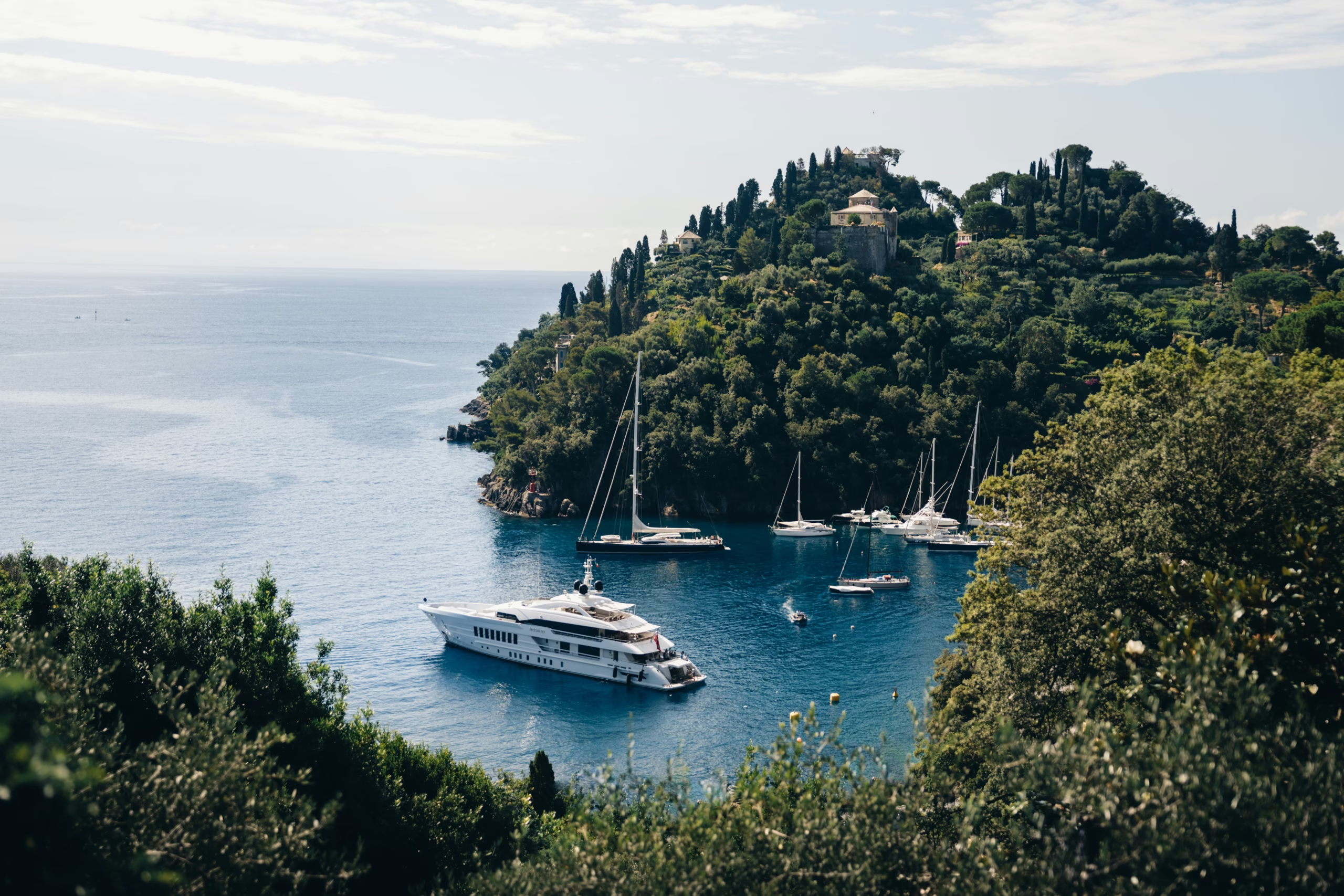
The Gulf of Saint-Tropez is one of the most sheltered in the Mediterranean. Surrounded by the peninsula to the south and the Massif de l'Esterel hills to the north, it creates a calm, blue, almost enclosed expanse of water. From a boat, one enters the gulf from the west, and the silhouette of Saint-Tropez gradually appears, exactly as it appeared to Signac from the Olympia.
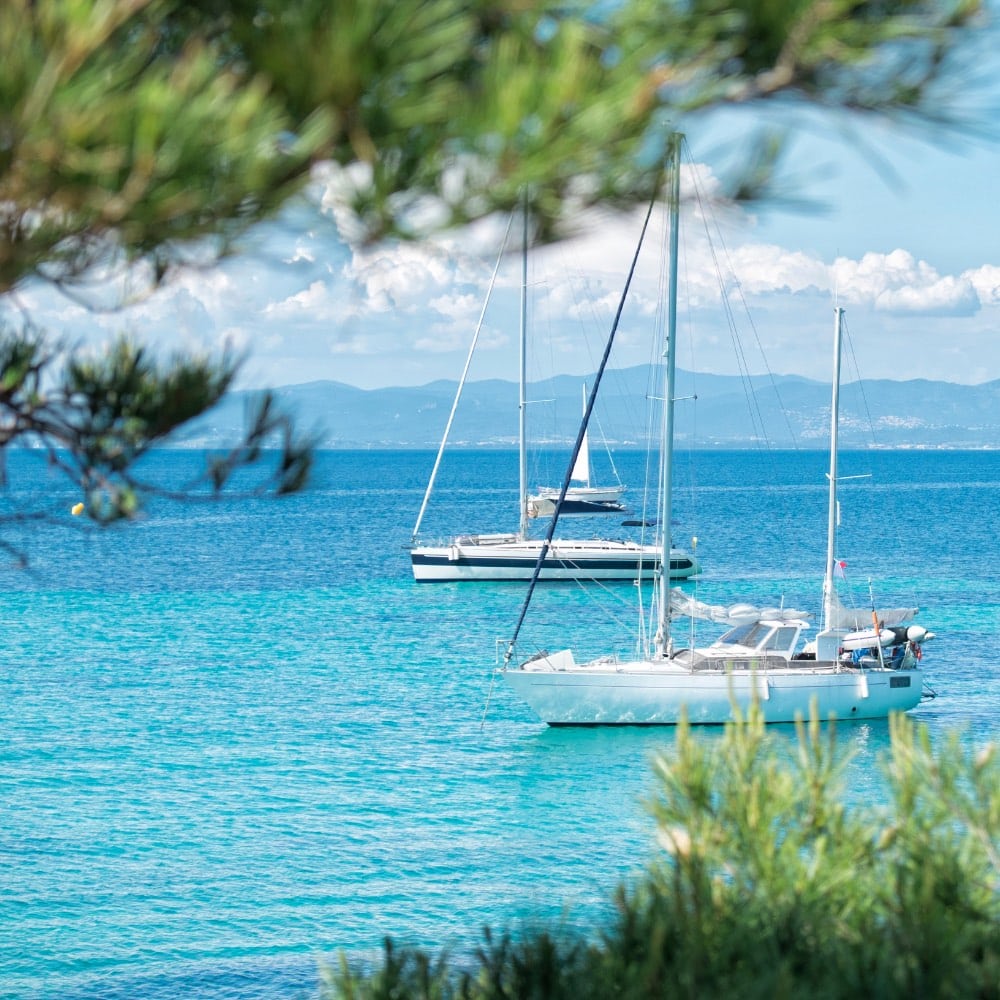
The peninsula itself is bordered to the south by the coves of Ramatuelle, Cape Camarat with its white lighthouse, and the creeks of Pampelonne, accessible only by sea or on foot from the beaches. The waters of the peninsula are among the clearest on the Var coast: seagrass beds, rocks just below the surface, and sufficient transparency to see the seabed at eight meters. This is where boats anchor in the summer, facing the pine trees and vineyards that stretch down to the sea.
The’Itinerary Saint-Tropez – Esterel Bay What we offer combines the gulf, the coves of the peninsula, and the red rocks of the Esterel, three completely different landscapes in the same day. It's one of the most varied sails on the Riviera, and one of the most sought-after by our clients who want to get out of the Cannes-Antibes area.
Starting from the Var, navigate between Saint-Tropez and Esterel allows you to cover the entire gulf in the same day, the village in the morning, the creeks of the peninsula in the afternoon. Arriving at Saint-Tropez by boat before the ferries, when the port is still calm, is to understand why Signac never really left.
What has not changed
The three inventors of Saint-Tropez all saw the same thing upon arrival: a sheltered gulf, a particular light, facades that seem made to be painted or filmed. It is no coincidence that a saint, a painter, and an actress made the same choice, in the same place, centuries apart. They did not invent Saint-Tropez. The place held them.
Signac understood it during a storm in 1892. Torpes had pointed it out eighteen centuries before him, without knowing it. From the sea, the citadel, the facades, the light, everything is still there. The setting came before everything else. It simply waited for the right people to arrive from the right direction.
→ Organize your day trip to Saint-Tropez by boat from Cannes
FAQ – Saint-Tropez by Boat
Can we go to Saint-Tropez by boat from Cannes?
Yes. The crossing from Cannes or Golfe-Juan takes about 1.5 to 2 hours depending on the boat and conditions. It's one of the most enjoyable trips on the Riviera, you skirt the Esterel, enter the gulf from the west, and arrive at the port by sea rather than by highway. In summer, it's also the fastest way to arrive: the roads in the Var are saturated from June to September.
Where to anchor around Saint-Tropez?
The best anchorages are in the coves of the peninsula, particularly in front of the beaches of Pampelonne and the coves of Ramatuelle. The gulf itself (Grimaud side, Sainte-Maxime) offers more sheltered anchorages. In summer, you need to arrive early in the morning for the best spots. Some areas are protected by posidonia seagrass meadows; mooring buoys are available.
What is the Bravade of Saint-Tropez?
La Bravade is the traditional festival of Saint-Tropez, celebrated annually on May 16th, 17th, and 18th. It commemorates the arrival of the body of Saint Tropez (Torpes) on the coasts of Provence. The inhabitants parade in period costumes and fire musket volleys in the village streets. It is one of the most colorful and oldest festivals in Provence, with traditions dating back to the 16th century.
The best time to visit Saint-Tropez by boat is generally from late spring to early autumn. * **May and June:** The weather is usually pleasant and sunny, the crowds are less intense than in peak summer, and the **sea is calmer**. It's a beautiful time to enjoy the coastline and harbors. * **July and August:** This is the peak season. The weather is reliably hot and sunny, perfect for swimming and enjoying beach clubs. However, it's also the **busiest and most expensive time**, with more boat traffic and crowded anchorages. * **September and early October:** This period often offers a continuation of good weather, with **warm seas and fewer crowds**. It's a great time for a more relaxed experience before the autumn weather sets in. **In summary:** For a balance of good weather, manageable crowds, and pleasant sailing conditions, **late spring (May-June) and early autumn (September-early October)** are often considered ideal. If you don't mind the crowds and want the hottest weather, July and August are also popular choices.
May and June are ideal: the sea is already warm (18-22°C), the coves are accessible without the crowds of July-August, and anchorages are available. September offers the same advantages with an even warmer sea. July and August remain beautiful but very crowded; you need to plan to leave early in the morning for the best spots.