

At the entrance to Villefranche-sur-Mer, the depth reaches nearly 100 meters. This is enough to accommodate the largest military fleets in the Mediterranean and has attracted all the maritime powers that have traversed the Riviera for the past seven centuries.
Anjou, Savoy, the Russian Empire, the American Navy—each dropped anchor here, for different reasons, with the same conviction: this bay is unlike any other. None stayed permanently. But all left their mark. And from a boat, today, you see precisely what they saw.
1295: A city founded for its harbor
Villefranche-sur-Mer was not born by chance. In 1295, Charles II of Anjou founded a town on this specific site, giving it a name that says it all: «Villefranche,» a free town, exempt from taxes to attract merchants. The reason for this geographical choice is simple and unchanging: the bay. Naturally sheltered from the prevailing winds and deep enough to accommodate the largest ships of the time, it was the main commercial port in the region at that period, long before Nice developed its own.
The House of Savoy quickly understood the military value of the site. In 1557, Duke Emmanuel Philibert had the Saint-Elme citadel built on the promontory overlooking the harbor. The objective was clear: to protect access to the water. The citadel still exists today. From the sea, it looks exactly as enemy ships saw it at the time: massive, impregnable, built to last.
1858: Imperial Russia settles in
This is the least known and most surprising episode in Villefranche's history. On September 16, 1858, Russia obtained a formal concession: the right to use the roadstead of Villefranche as a base for its imperial fleet in the Mediterranean. The context is the Crimean War and the Treaty of Paris of 1856, which prohibited Russia from having a military navy in the Black Sea. It needed a base in the Mediterranean. It chose Villefranche.
For twenty-six years, Russian warships have called here. Officers settle in town. Families establish themselves on the French Riviera. The Russian presence on the Riviera, of which Nice still bears traces in its place names and architecture, largely began here, in this bay. The concession ends in 1884. The ships depart eastward. The bay, however, remains.
1945-1966: The U.S. Sixth Fleet
After World War II, a new naval power discovered Villefranche. The U.S. Navy established its Mediterranean fleet there, which officially became the 6th Fleet in 1948. The same reasons applied as in 1295: depth, natural shelter, and an ideal geographical position between the American bases in Southern Europe.
In May 1956, Villefranche became the official home port for the flagship of the 6th Fleet. For nearly twenty years, American uniforms were a part of the daily scenery in Villefranche. Bars, restaurants, and an entire economy revolved around their presence. And in 1957, during this period, Jean Cocteau decorated the Saint-Pierre Chapel, a small 14th-century fishermen's chapel, transforming it into a total work of art, «as a sign of friendship» with the people of Villefranche.
In 1966, Charles de Gaulle withdrew France from NATO's integrated command. The Americans were ordered to leave. The 6th Fleet weighed anchor and did not return. Some sailors, it is said, returned on their own, to retire in a city they couldn't forget.
What the roadstead gives from a boat
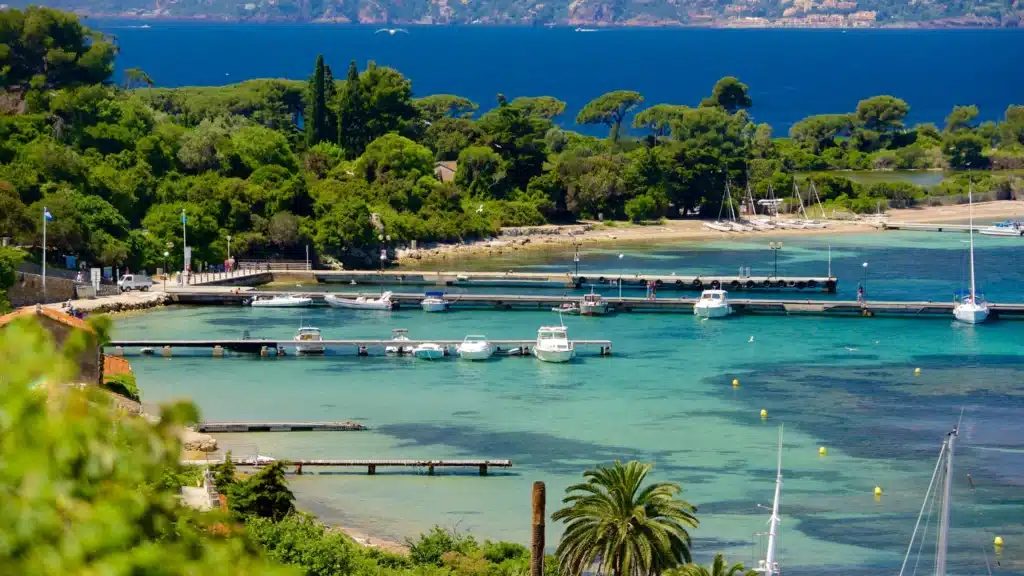
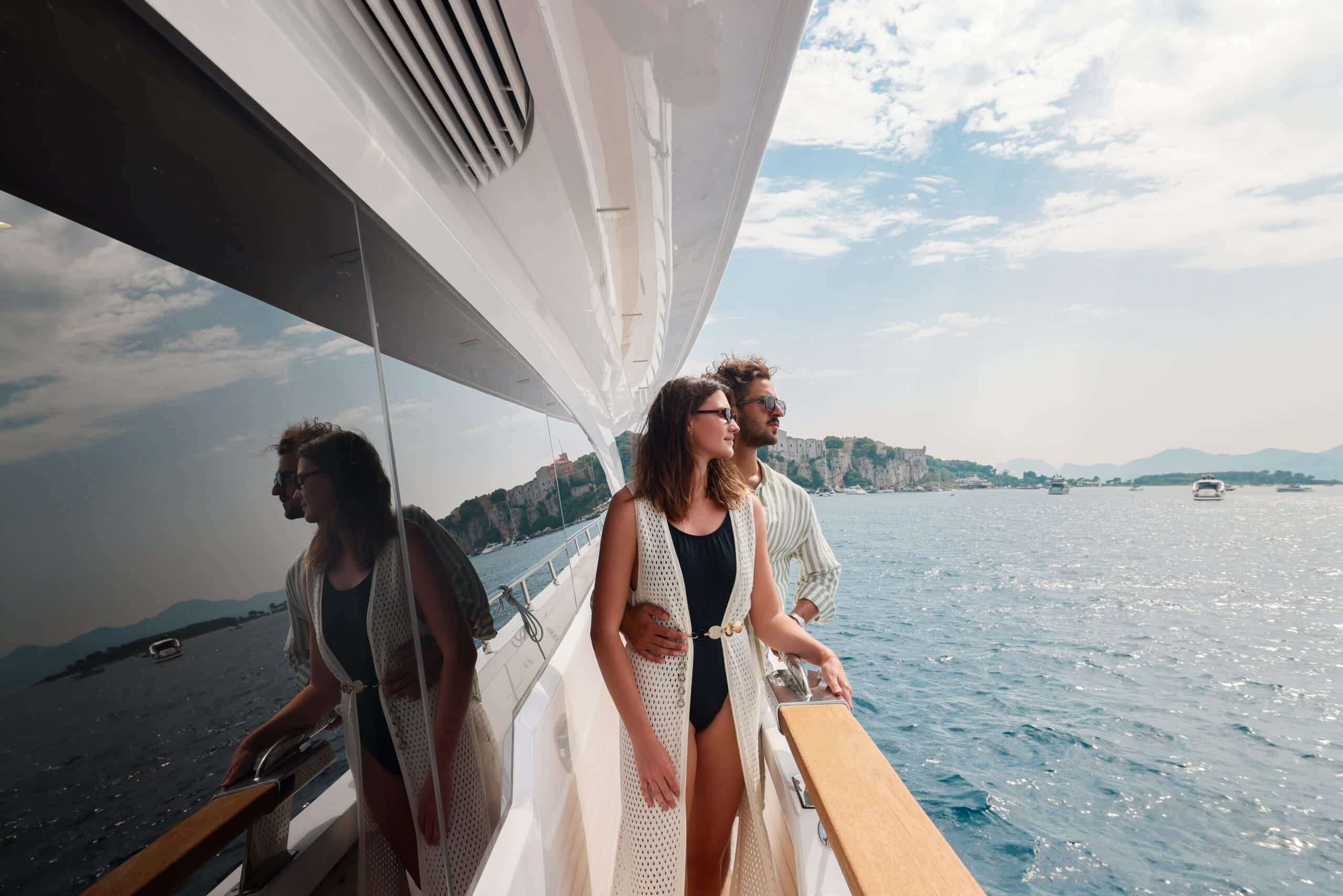
Seen from the sea, Villefranche-sur-Mer reveals itself differently than what tourists see from the waterfront. The bay opens up as you enter from the east, 2.5 kilometers long and 1.5 kilometers wide, with the colorful houses of the old town tumbling almost directly into the water, and the citadel dominating everything from its promontory. It's an image that centuries have not greatly altered.
The water is particularly clear there. The depth of the bay and the currents that run through it create exceptional visibility conditions for such a busy area. For this reason, an oceanographic observatory has been located there for decades, for daily deep-water plankton observations.
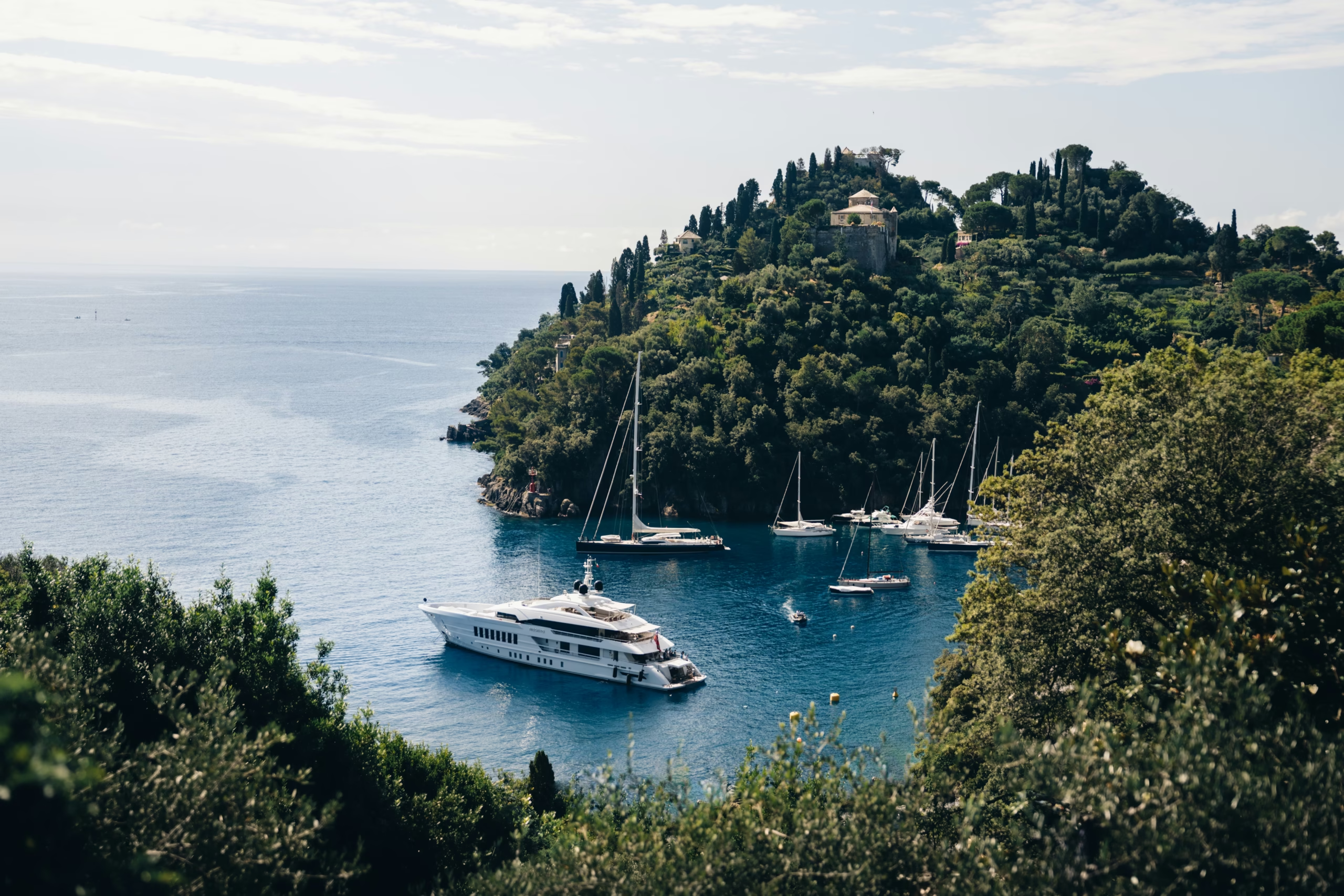
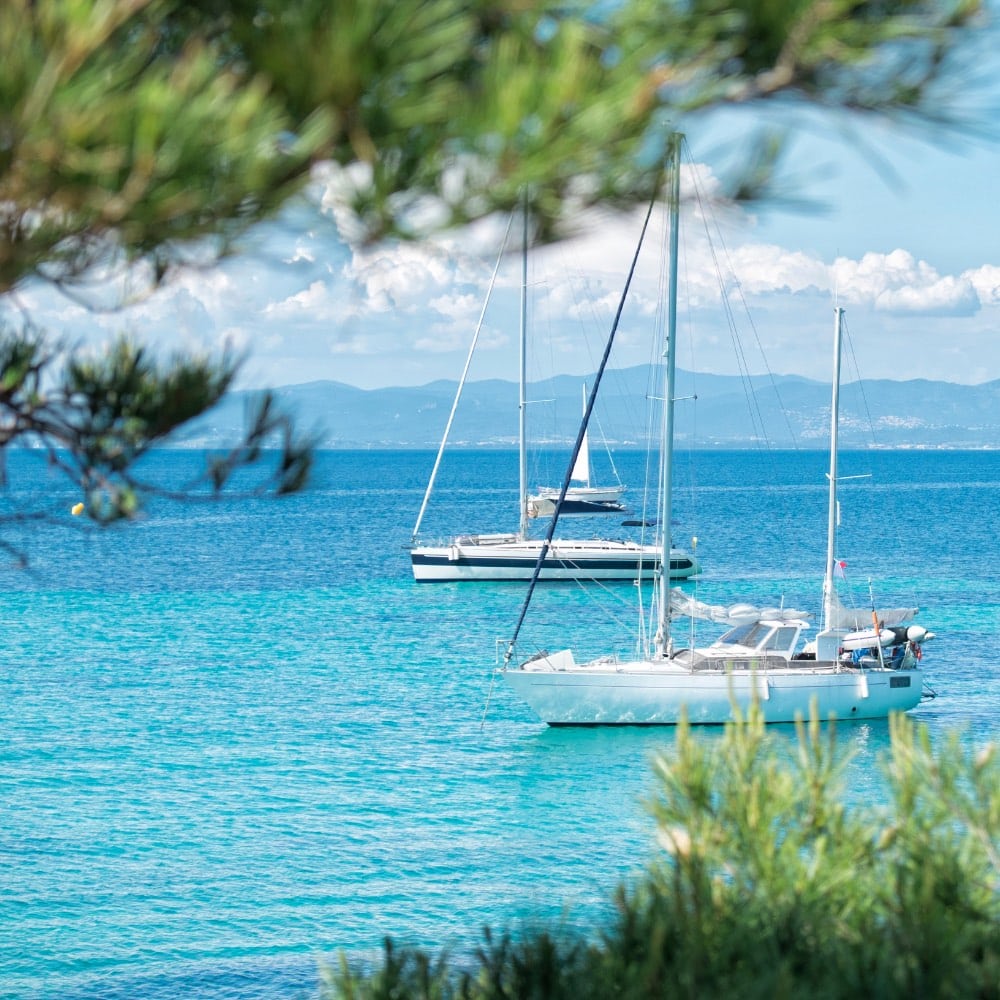
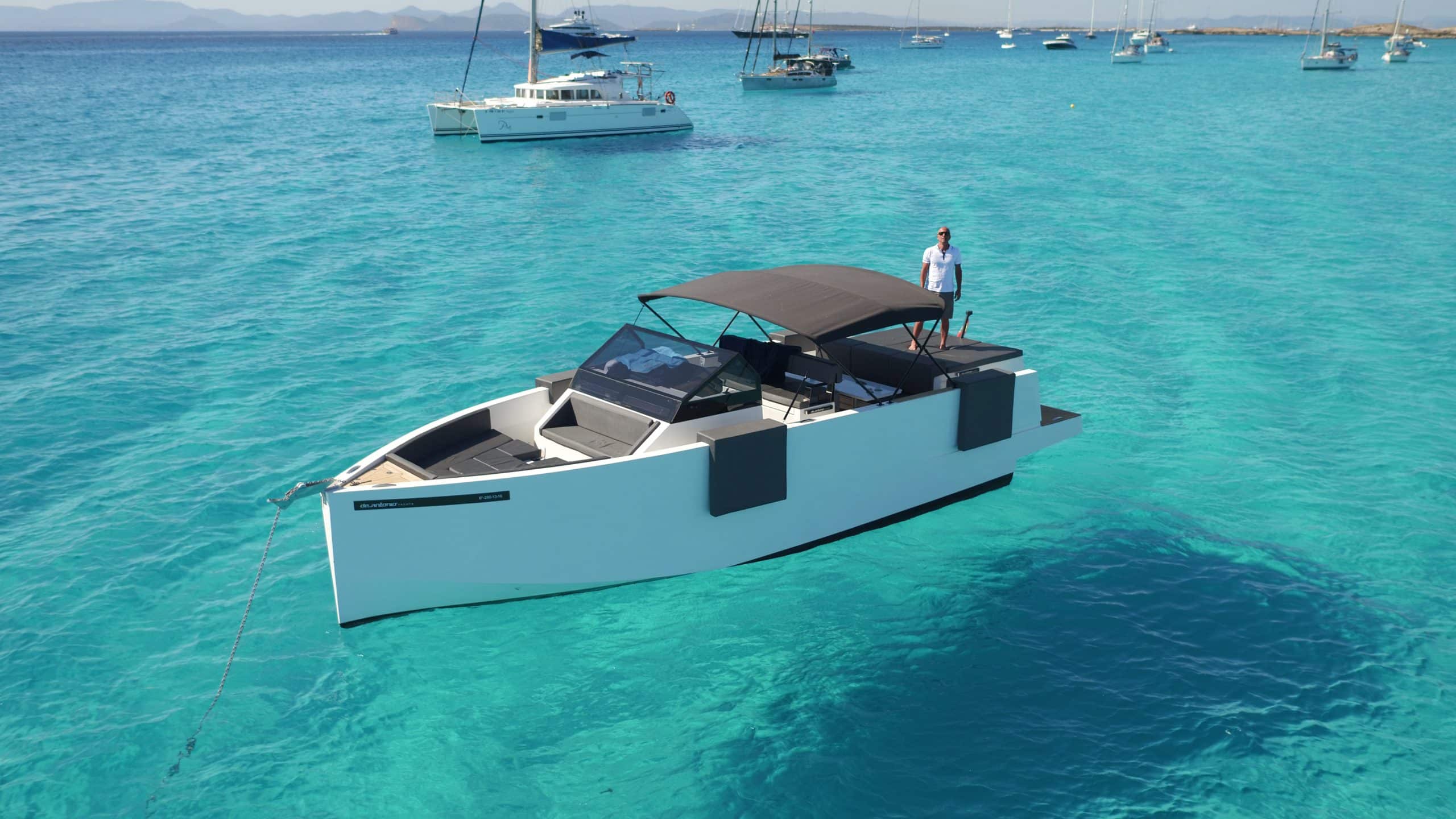
The anchorage in front of Villefranche is one of the most sought-after on the Nice – Villefranche – Monaco route sheltered, accessible, with a view of the old town that alone justifies stopping. From a boat at anchor, the town seems built directly into the slope, almost hanging over the water. Even in high season, the configuration of the bay gives a sense of space rarely found on the French Riviera. Cap Ferrat is a few miles southeast, and Monaco appears around the bend in the coast continuing eastward.
Villefranche on a boat itinerary
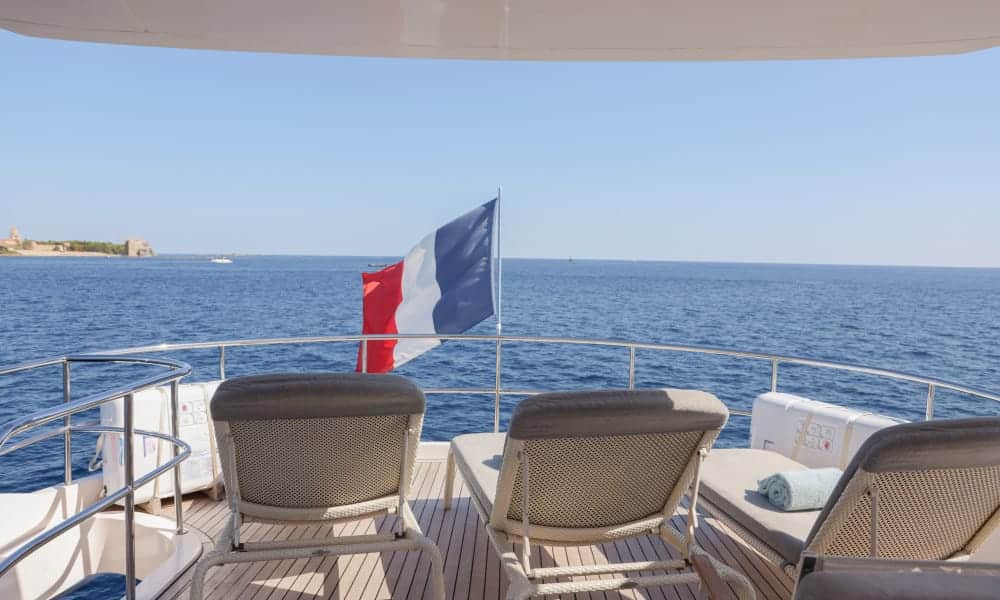
From Nice or Golfe-Juan, Villefranche naturally fits into a day of sailing eastward. The harbor is twenty minutes from Nice, forty-five minutes from Cannes. You can anchor there, swim in unusually clear water for the Riviera, cruise along the old town by dinghy if you want to stop on land, and then head back towards Cap Ferrat and Monaco to end the day.
This is precisely the program our skippers offer on the’Itinerary Nice – Villefranche – Monaco, departing from our boats based on the Nice – Monaco zone. Villefranche is often the midday stop, the one where the group slows down, where you stay longer than planned, where the conversation stops the moment you look at the citadel from the water.
From the bay, one understands why Charles II of Anjou founded a city here in 1295. And why no one has ever truly left of their own free will.
→ Organize your day trip by boat from Nice to Villefranche and Monaco
FAQ – Villefranche-sur-Mer by Boat
What is the depth of the roadstead of Villefranche-sur-Mer?
The Bay of Villefranche-sur-Mer reaches depths of 80 to 100 meters at its entrance, making it one of the deepest natural bays in the Mediterranean. This exceptional depth explains why it successively hosted the Russian fleet and then the American navy during the 19th and 20th centuries.
Can one anchor in Villefranche-sur-Mer on a private boat?
Yes. The Bay of Villefranche is accessible to visiting boats and offers good anchorage conditions, sheltered from prevailing winds. It is one of the most popular stops along the route between Nice and Monaco, with particularly clear water and a direct view of the old town and the Citadel Saint-Elme.
Why was the US Navy in Villefranche-sur-Mer?
The U.S. Sixth Fleet was stationed in Villefranche-sur-Mer between 1945 and 1966, drawn by the same advantages that attracted the Russian fleet before it: a naturally deep, sheltered harbor well-positioned in the Mediterranean. In 1956, Villefranche became the official homeport of the flagship. The American presence ended in 1966 when De Gaulle's France withdrew from NATO's integrated command.
What did Jean Cocteau paint in Villefranche-sur-Mer?
Jean Cocteau decorated the Saint-Pierre Chapel, a small 14th-century fishermen's chapel, in 1957. There, he created a series of frescoes depicting scenes from the life of Saint Peter, «as a sign of friendship» with the inhabitants and fishermen of Villefranche. The chapel is now one of the most visited artistic sites on the French Riviera.